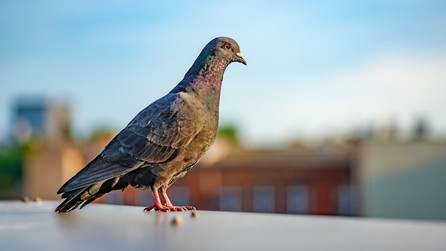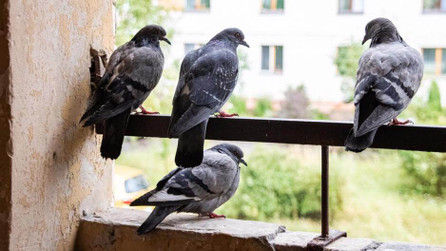
Pigeons have been around dating back as early as 3000 BC. At one time the pigeon was widely worshipped and considered to be sacred. Throughout human history, pigeons have adopted different roles ranging from messengers, war heroes, pets, and pests! A definition of “pest” is something resembling a pest in destructiveness, detrimental to humans or human concerns, one that annoys.
Some people may revere the bird, but not everyone has to. Pigeon poop can be very annoying when the pigeon has made it’s home your home. Not only annoying and unsightly but it creates a hazard that many do not know about. According to the New York City Department of Health and Mental Hygiene (DOHMH) there are three human diseases associated with pigeon poop: histoplasmosis, cryptococcosis, and psittacosis.
Histoplasmosis and cryptococcosis are both fungal diseases and can be detrimental to those whom are immune compromised. Psittacosis is rare, but can still be transmitted like the other to fungal diseases by inhaling the dust from the droppings when they are airborne.
Bird control products around the home will ward off this hazard and keep the property protected and sanitary. Pigeons love to perch on the patio tops and roofs. Bird spikes will safely and humanely dissuade this behavior. Bird spikes simply create an uneven surface for the bird to land. It is uncomfortable for them, and they will fly on by to another backyard that might have a bird feeder.
Installing bird spikes is easy. Bird spikes have pre-drilled holes along the base and can be screwed down. The spikes can also be glued down or even tied into place. The plastic bird spikes are virtually invisible when installed correctly. What helps the inconspicuousness is that they come in a variety of colors to match the paint on the house or the color of the patio and rooftop. The spikes are also U.V. protected, and sun and weather proof to ensure long usage.
Let those who love the birds, build their birdbaths and buy birdseed, and you can, without guilt, create a bird deterrent system that will keep your home bird free.
There are many ways to create a safe haven at home. It is also a crucial time to make the home a safe and peaceful environment. If there were rodents, ants, and other bugs, you would surely get rid of them. The same thing is true about pest birds. The only difference is pest birds just need to be encouraged to move along to find another place to nest and roost.
Humane action against pest birds such as pigeons, woodpeckers and swallows is as easy as blocking them away and/or scaring them away. Physical bird deterrents such as bird netting would bar them from unwanted areas. Sound sound deterrents would scare them away and keep them away.
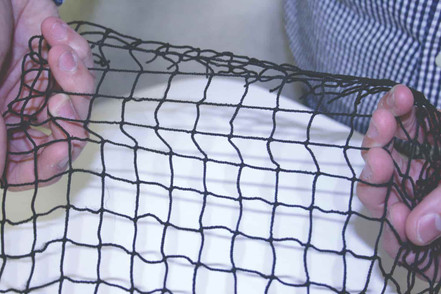
Bird netting is ideal in places that the pigeons and swallows like to nest. Eave areas, rooftops, balconies and garages are a few places that they commonly nest and roost. Placing bird netting would block birds out of these areas. This is something you want to look into at the beginning of the New Year, before springtime brings about the active nesting and breeding. Bird netting is installed using net clips, hooks or the handy staple gun. The bird netting is lightweight and is virtually invisible from the ground. Bird netting is durable, long lasting, and U.V. protected to ensure its strength.
A sound or sonic unit is a way to scare the birds away by creating an environment with their own distress calls and predator calls. The sonic unit has over 22 different types of species programmed into them. You can set the sound deterrent to play a specific bird species or there is a general setting that covers a multitude or bird types. The sound bird deterrent covers the whole property and maybe even beyond. It covers at least an acre, or more if you add additional speakers.
Installing these two types of bird control products is a weekend project for a homeowner. Rest assured, this one weekend project will give you respite and peace for the weekends to come. Making your home safe will bring harmony and relaxation to your doorstep.
Is the peak of your roof where the birds perch and make an unsightly mess with their droppings? This can be a terribly ugly scene for you and for your neighbors. Bird proofing the roof can be a planned community event. This way, when bird proofing your roof, the birds have to go further than just next-door. Your neighbors will thank you.
Usually the birds that perch in large flocks are the sparrows and starlings. There probably have been many times you have heard a noise and hundreds of birds flee from one tree. Many times this exact scene is in a movie. It really is an amazing site to see.
What is not amazing, though, is the many birds hiding in the trees and on the roofs that you don’t see. That is when they are damaging the property. The acidic poop from the birds is mounting up day by day. There are stories in the news about roofs caving in due to the heavy build up of bird feces. Not a pretty site, nor a healthy one.
Bird deterrent products such as bird spikes, bird slopes and even sound bird deterrents can be advantageous for the community. Bird spikes can be placed on the high peaks of the roof to prevent the birds from landing. Bird slopes can be placed in the eaves where birds like to hide and nest. Another common area where birds go is the ledges, I-beams and windowsills. A bird slope can also be used in these areas. The bird slop works by creating a 90-degree “slippery slope” making it nearly impossible for the birds to land comfortably. A sound deterrent can cover up to 5 acres in space. The sound bird deterrents work by playing predator calls and distress calls through a speaker. The birds are scared away.
Protecting the home and the small community takes very little planning, a little elbow grease, and time outdoors on the weekend.
The swallows are coming back. In San Juan Capistrano, California, it is a major event. They leave town every year in October, but arrive back in time for spring festivities. People come from all over the world to welcome them back from their long journey traveling from Argentina. The old churches in San Juan Capistrano ring their bells in welcoming. There is a parade celebrating their miraculous return.
The legend is that the swallows took refuge on the Mission San Juan Capistrano from an angry innkeeper who destroyed their muddy nests. They return each spring to the old ruined church and it’s walls of protection. The city has even passed ordinances against destroying their nests.
Swallows who attempt to build their mud nests on homes, is a different story. You do not want this to happen. The homes become a muddy mess and will stain the surface permanently. They are as much of an eye sore as they are a hazard. And unlike the City’s Mission, you do not have a maintenance team going out every day cleaning up. The swallow nests are hosts for fungus, parasites and disease.
Bird deterrents can be put into place to ensure your safety and well being at home. Under the eaves is a perfect location for the pest bird to hide from its predator’s and take refuge from the elements. This is an area that needs protection. Bird netting is the perfect physical barrier to block the birds out of this area. It is a very low profile bird deterrent. When installed properly it is virtually invisible. Bird netting is very strong, yet lightweight. It is durable and long lasting because it is made of U.V. protected polypropylene. You simply secure the netting around the perimeter using net clips, hooks, or even a staple gun.
Unlike your home, the mission where the swallows are welcomed is near two rivers making it an ideal location because of the abundance of insects on which they feed. Let the swallows fly on by your home and find themselves another ideal location like the mission.
Whether you are starting your peach tree from seeds or you have a mature tree in bloom, they need to be protected by many different pests, one being the pest bird.
The peach was first cultivated in China. Peaches were often mentioned in Chinese writings as far back as the 10th century BC. Peaches were the favorite of kings and emperors. Alexander the Great first introduced the peach into Europe after he conquered the Persians. Then it was brought to America by Spanish explorers in the 16th century and made it to England and France in the 17th century where it was a prized and rare treat.
The weather in Georgia is ideal for growing peaches. The states nickname is the “Peach State” because of its production of peaches. A peach tree is a pretty tree to have in the yard. The peach blossoms are a gorgeous color when in bloom.
Protecting the peach tree from pest birds is pretty straightforward. Bird control products put in place can save the delicious grown peach for the family. Birds adapt easily to their surroundings. Placing a couple different types of bird control products is necessary.
Visual bird deterrents are a good way to initially scare the bird away. Birds dislike shiny objects that move. Bird diverters are made of a shiny, rugged plastic material. There is a design on the side that is a foil design. To the bird it appears to be a predator’s eye. Hanging the diverters in the peach trees will keep the pest birds away from the fruit, and the movement of the shiny object will scare them and they will fly away.
Garden bird netting is a physical deterrent that will block the bird’s access to the tree. The durable, virtually invisible netting protects the fruit well. Using the physical deterrents with the visual deterrents makes sure the pest bird does not get use to any one type of deterrent and find a way to get around it
Peach trees are very delicate. But to produce the finer things in life takes extra special care. It is worth it.
Large backyards are wonderful in so many ways. There is plenty of room for a garden, swimming pool, and grass area for game playing during get-togethers. Large backyards attract other family members and friends. It is a great asset when re-selling a home.
What is not so great about a large backyard is that it attracts a larger amount of pest birds. More and more birds are flocking to urban areas and the problem of how to keep birds away from the home is a question that is increasingly asked.
The reason you want to come up with a bird control strategy for not having birds on your property is the spread of disease and the structural damage to any buildings; your home, barn, garage, patio and pool house. The disease is from the bird droppings. They harbor many fungal agents, parasites and insects such as bed bugs. The droppings are also very acidic and can eat through and corrode just about any materials, including metals.
Bird deterrents are the only way to get rid of woodpeckers and other birds wreaking havoc on your property. There are a variety of bird deterrents to choose from. Bird spikes are a very popular bird deterrent that encourage the bird to fly on over your property.
Bird spikes are one of the most effective bird deterrents at preventing a bird from perching on a ledge. If the bird cannot perch, they cannot have that viewpoint to the rest of your yard. Since most birds like to perch high above, look at the tallest structure in the backyard. Usually it is a patio cover, which is the height of the home or the garage. Placing bird spikes on the ledges of the garage and rooftops will take away that vantage point.
Forcing them to fly by is also a way of not dealing with the bird droppings. They will not be around long enough for them to accumulate. Bird spikes are easy for homeowners to install. They can be either screwed down, or glued down.
Your backyard will be more available for you with less pest birds around.
Why use humane bird deterrents?
One of the key reasons to use humane bird deterrents is because there is the Migratory Bird Treaty Act of 1918 (MBTA). It is a federal law to pursue, hunt, take, capture, kill or sell migratory birds. The statue also grants complete protection to any bird parts including feathers, eggs and nests. There are over 800 species of birds that are on the list. Some of the birds that are on the list are Canada Goose, crow, sparrow, swallow and woodpecker.
Although these birds are protected under law, it is wise and necessary to humanely dissuade them from your home or business. There can be a huge negative impact when migratory birds seek reprieve within the trees and structures on your property. Millions of dollars are spent each year on clean up and repair from the destruction of the pest bird.
The bird droppings are what cause the destruction. The acidity in the droppings can eat through all kinds of materials including wood, canvas and even metals. Birds have a very high metabolism rate that makes them drop their unwanted “bombs” anywhere from 20 to 50 times a day. If allowed to accumulate for any length of time it is not hard to imagine the damage that can be done.
There are, thankfully, safe and humane ways to get rid of woodpeckers and get rid of geese, and bird control for just about any nuisance bird that is protected by the MBTA. Bird netting can easily be applied to the eaves of the home, or the siding of the home to prevent birds from nesting in the eaves and to prevent the woodpecker from pecking on the exterior of the walls. Bird spikes can be placed on rooftops to make it uncomfortable for the bird to land on the roof. Shiny reflective flash tape and bird diverters can be hung in trees to scare them away.
Blocking the bird and scaring the bird is not harming them at all. It is just using bird control products that work against their natural instincts.
Homeowners can take rest in the fact that they do not have to re-create how to keep birds away from home. It has already been done. Nor do you need to sit outside with a b-b-gun and shoot at the birds in the trees. In the past, desperate people have used the b-b-guns. They have also used shiny household items to distract the birds and try and scare them away, and beat on pots and pans to get them moving away.
There are devices now specifically used for bird control in the home. Reputable bird control companies will help you guide your way through what is needed for your specific issues.
It is not a matter of how to keep birds away from the home; it is the matter of why. Pest birds only do what comes instinctual to them, which is finding a safe area away from their predators to roost and nest, and also the natural need to eat and poop. Birds do not care if their eating disrupts and disturbs the home in any way such as making a mess of the trash in open trashcans. They are also known to eat dog and cat food. Bird poop is another story. Not only is it unsightly and messy, but it can be dangerous. The fresh poop whether it is on the grass or patio cement floor can be very slippery. There are many incidents each year of slip and fall accidents from fresh bird poop. If it is allowed to accumulate and dry up, it can also harbor many different types of fungus that can be transmitted to humans causing upper respiratory diseases. Nesting is the natural action before breeding.
Bird deterrents on the market consist of bird garden netting, goose repellents, woodpecker repellents, bird spikes, and many more bird control products. Whatever difficulty you encounter with the pest bird, there is absolute bird control for the problem.
Do not re-create the wheel. Take time to research the best bird control company that will work with you to determine your needs.
Springtime is coming soon and homeowners will once again be dealing with flocks of birds looking for the perfect place to build their nests and raise their chicks. Now is the best time to start thinking about how to keep birds away from home and garden. Setting physical bird deterrents in place before the pest birds return can aide in encouraging the flocks to fly right by.
Damage to House & Paint
Woodpeckers get their name from their feeding and nesting habits. The male woodpecker’s springtime marking and mating ritual is to blame for the constant drumming that can be heard seemingly right outside the bedroom window. Woodpeckers have a pecking sequence that marks their territory and in the process attracts female woodpeckers. This is more of a springtime ritual and decreases dramatically after the mating season is over. Major harm to bird or tree is unlikely.
However, woodpecker house damage is a serious concern. If a woodpecker decides that it wants to peck a hole in the side of a house for its new home, this can lead to physical damage and decrease the value of the property. Installing exclusion methods like bird netting can stop woodpecker house damage before it even gets started.
Bird Netting
Woodpecker control can be accomplished by installing a lightweight polypropylene bird net in areas where protection is required. The mesh comes in a variety of sizes, length and widths, so it can be cut to fit any space. It is virtually invisible when installed, and discourages woodpeckers from pecking on the side of the house by creating an unstable landing surface.
Woodpeckers prefer to excavate under the protection of house eaves, so apply the woodpecker netting at the edge of the overhang with staples or plastic clips. Let it hang down away from the surface using weights to prevent movement. The bottom of the netting can also be attached to the side of the house with peel and stick hooks found at many hardware or lawn/garden care stores.
Birds have a very keen sense of survival. They look for spots to nest and roost that are out of the way of their predators. This is why they often roost and nest in the eaves or rafters of the home. Their objective is to hide their existence from their enemy.
Using the bird’s vulnerability by deterring them with this same sense of fear is how to keep birds away from youf home. Scaring birds away has been in action for centuries. But with new technologies and new tested bird control products, it has become more prevalent and a whole lot easier.
Along with the fear factor, creating a barrier between the pest birds and roosting and nesting sites is another way to keep your home pest bird free. Bird netting is ideal for blocking the bird out of unwanted places. You do not have to worry about your home looking like a prison when the netting is installed. It is practically invisible when put up correctly. Bird netting is made of polypropylene and is U.V. protected. It is lightweight and very durable which makes it easier to use.
Scaring the bird away is even easier than blocking them out. There are reflective type bird diverters that appear to have a predator’s eye on the sides of them. They are reflective because they have a shiny surface. When the sun bounces off the shine and it moves in the breeze, the birds will do an about face and fly away in fear. It will not harm the bird in any way. It actually only motivates the bird to get to safety. There is also very simple tape that can be hung in the trees or along the home or patio. This flash tape is shimmering red. It too, moves and ripples in the breeze. It also makes a noise that the birds do not like.
The scare bird deterrent devices along with the netting will ensure total management of the bird. It does not take strenuous work, just a few great products to put in the birds way.
Birds have no boundaries. They can fly and perch and nest wherever they find an available location that suits them. Birds are instinctual creatures. All behavior is explained by the need to survive. Migration is undertaken to winter in gentler climates. It is not difficult to understand the terms of survival. The terms are need for water, food, shelter and reproduction.
It is okay to get rid of birds on your property. By creating uncomfortable situations where they might naturally perch, roost and nest is all it takes. It is both safe and humane for all involved. There are products that are safe and humane that work against the bird’s natural instinctual behaviors. There are types of control that block the bird out and that works against the bird’s visual instincts.
Physical Bird Deterrents
These types of the deterrents physically block the bird from an area. For example, garden bird netting can be used on fruit trees and blueberry bushes to keep the bird from eating the fruit. The netting is suspended over the plants with a series of poles. Trees can be wrapped with the netting. Bird spikes are another type of physical bird deterrent. Bird spikes are ideal for rooftops, ledges and fences. It stops the birds from landing on the surfaces. The spikes have blunted ends, so even if the bird attempts to perch, they will not be harmed, just very uncomfortable, which will force them to fly away.
Visual Bird Deterrents
Visual bird deterrents work by scaring the bird away. There is flash tape that is an iridescent red foil Mylar tape that can hang in trees or around the patio. The shiny surface moving in the breeze is what irritates the bird and scares them away. Diverters and scare balloons also are shiny and they have a printed design that resembles a predator’s eye to the bird, again, scaring them away.
Bird control in place at home is setting boundaries for the birds. It is your right to protect your property, using humane bird control products.
Los Angeles is full of iconic eateries. It is a city full of visitors each year and also a city where people live outside of their homes. They stroll along Hollywood or Sunset Boulevard, or take a drive over to Culver City to eat at the iconic Mexican food stand, Tito’s. So many options are available to the locals.
The locals also know how to maneuver around the birds that are out looking for food as well. Tito’s, for example, is near an underpass. The underpass is the perfect spot for birds to roost and nest. It is also great if their food source is right next door. Birds flock over to Tito’s and harass the patrons. If you are visiting, it can be kind of fun to feed the birds bits of chips or your leftover rice. If you are there for a quick bite to eat before you get back to work, it can be annoying. It has been known for a patron to cross the street near their back patio and dump some food on the sidewalk. This gets the attention of the birds, and leaves those on the patio alone for awhile. It was a smart move because the patron was able to eat lunch in peace for a few minutes.
A smarter move would be for the business owner or property manager to install bird deterrent products for its customer’s convenience. There are many outdoor eateries in the Los Angeles area that install bird control. Some of the local coffee shops have bird spikes installed on top of the patio area lighting and the eaves and open beams. Bird spikes stop the birds from landing on the area. If there is no safe are for them to land, they will look for another location.
Bird spikes are very inexpensive to purchase. They are very easy to install. Bird spikes installed on rooftops will let the birds know that they are not welcome. There will also be less bird dropping messes to clean up at the end of the day.
Bird control is constantly evolving. We have come a long way since the old beating the pots and pans or shooting of guns to get the birds away from the trees and homes. It has also been determined that bird feces are quite a dangerous substance. It is known that they are messy and ugly, but they really can be quite hazardous.
Roosting and nesting birds will accumulate quite a build-up of bacteria, viruses and fungal agents within the feces. Their droppings not only carry diseases and such, but they can erode steel, wood and paint. There are reported incidents of bridges collapsing, in part from the damage of pigeon poop. There are three main types of bird control.
Sound
The newest ways to frighten the birds away are by using a sound or sonic device. There are sonic units that play predator calls and distress calls every 10 minutes. This sound deterrent has over 22 types of birds pre-recorded in the unit. If you are unsure of what type of bird you are dealing with, there is a general setting that will cover a multitude of species. The single unit can cover up to 1 acre, but with extra speakers, you’ll have coverage of 5 acres. It is ideal for large backyards. There is volume control and an easy to read program display. It can be programmed to turn off and on at certain times.
Physical
Physical bird deterrents are objects that get in the way of the bird. Bird netting and bird spikes are both very commonly used to keep the birds out of certain areas including the rooftops and eaves. There is even woodpecker deterrent netting for the sides of the home where they like to drum. Woodpecker house damage can be quite extensive.
Visual
Most bird control products that work on the bird’s vision are reflective and shiny, such as reflective bird diverters and flash tape. The material used is a sun reflector, but also the movement of the deterrents frightens the birds.
All are safe and humane, while being inexpensive and practical for the average homeowner.
If you are a tennis fan then you have heard about the disruption at the 2012 Australian Open. The National Post described it as a scene from Alfred Hitchcock’s horror movie “The Birds.” The swarm of seagulls was having a grand old time with the fan’s leftovers from the concession stands.
There were also serious problems at Wimbledon, too. Pigeons were taking over the stadium. The organizers will be looking for ways to prevent this occurrence in the future.
No one is immune to the pest bird. There are many planned communities that host tennis tournaments, swimming meets, and after school activities in the neighborhood parks. Birds are attracted to these events as well. The birds are going to come whenever there is food available to them, and this even means your backyards.
Planning to deter the birds should be a yearly event. Before spring is in full action, look around and see what areas around the home are vulnerable. Is their a view from the patio cover or rooftop where the birds will perch just waiting to swoop down and grab the grub?
If yes, and more times than not, the answer will be yes, bird spikes can be placed along the edge of the patio cover, or the edge of the rooftop. Another area that the birds love to roost, and where they often will nest, is the eave of the home, front or backyard areas. Bird spikes will work on any flat or curved surface. The curved surface could be a patio light up in the corner of the patio.
Another physical bird deterrent that is successful in deterring birds in the backyard is the bird spider. This deterrent is spider like because it has long spindly arms that move in the breeze. The bird spider is ideal to install on skylights, air conditioning unites and rooftops. They work well near pools and Jacuzzis. Bird spiders are often seen on boats to keep the seagulls away.
Hopefully the bigger venues that have bird control issues will develop a strategy to get rid of pest birds.
Backyard antics of the pest bird includes perching and pooping on the patio furniture, roosting and nesting and pooping in the eaves of the home, and eating the seeds and garden vegetation. Birds can be very beneficial to the environment but not the part where they cause damage on your property.
Each year homeowners spend countless hours cleaning up after the birds. Tens of millions of dollars is spent each year from damage their droppings cause. Bird droppings are very acidic and they eat away at various substrates, especially tar-based roofing materials. They damage ventilation systems, machinery, buildings and much more.
Nesting materials can also be quite hazardous. They are known to nest near electrical outlets which can cause fires. They often nest inside chimneys and ventilation systems which can clog up the entire system as well as spread diseases through the systems. Birds and their nests and feces harbor over forty types of parasites and can host over sixty types of infectious diseases.
It is time to take bird control in the home seriously. Garden bird netting is one way to block the bird from entering these vulnerable areas. Bird netting can be used for the eave areas, rooftops, vegetable and fruit gardens, fruit trees, barns and balconies to name only a few areas. The netting is durable and made of a U.V. protected polypropylene. It is lightweight and easy to install. The netting is virtually invisible when put up correctly. There are different mesh sizes to choose from depending on the bird. There is even woodpecker netting when there is a need to get rid of woodpeckers.
Using a visual bird deterrent or a sound deterrent in conjunction with the netting is recommended. Birds are very smart creatures. They can get use to one type of bird deterrent and figure out a way around it. Using a couple different methods helps with the success of the mission.
The purpose of bird control is not to harm the bird, but to make it impossible for them to make themselves at home.
Boating is one of those seasonal sports that people get excited about. Fishing trips with the guys, family outings on the weekends, and out of town visitors in summer are fun reasons to take the boat out.
Getting the boat ready for the season includes maintenance checks such as checking the safety gear, fuel systems and fluid levels. Annual maintenance checks help get the boat out quicker and ensure safety on the seas.
Bird proofing the boat should be on the maintenance checklist. There are different types of bird control products that can keep the boat free from nesting materials and bird feces.
A solar-powered bird deterrent uses motion to scare away pest birds such as seagulls, crows and pigeons. A solar repeller is a unit that has a base that can be mounted to the boat on either a flat surface or an angled one. They are very easy to install. There are two metal “arms” that screw right into the top of the repeller cone base. The arms extend 2.5’. The solar power causes continuous motion that prevents the bird from landing. It does not injure the bird, just scares them away.
Another scare tactic to use is a visual bird deterrent such as a reflective bird diverter. The scare diverter can be hung on the railings and especially the high areas of the boat where the birds like to perch. The diverters have a “mock” predator eye design on the side. To humans it is just a nice design, but it scares the bird away. They also are made using a reflective material that irritates the bird’s visual senses.
There are also balloons that work the same way and have a similar design. The balloons are the size of an average beach ball. Flash tape does not have the design, but the tape is made of Mylar and is a shimmery red. Like the other visual diverters, the movement of the shiny flash tape annoys the bird.
The low cost and quick installation of these products will ensure a long season of bird free boating.
It is time to get ready before the swallow returns to their nests. Swallows that are allowed to build their mud nests on the home will permanently stain the structure. Swallows are very territorial, so if you had them last year, you will surely have them again. If you know they are close by and have invaded areas near you, it would be wise to guard against them nesting on your property.
The mud nests are not the only mess they make. The droppings that the birds leave down the side of the home are not a pleasant site. Bird droppings are also very destructive. They are highly acidic and can corrode all different types of surfaces and structures such as paint, wood, canvas and even metals.
Not only are they damaging, but the nesting materials and the droppings are dangerous to humans. They harbor bacteria, parasites and fungal agents. The nests are also often infested with insects.
Bird control needs to be in effect before the nests are inhabited. Swallow nests are protected under the Migratory Bird Treaty Act of 1918 that states that it is illegal to intentionally damage or destroy nests, eggs or the babies. There are swallow bird deterrents that are safe an humane for the bird and the homeowner.
Bird slopes are a very effective bird control to use at home. Bird slopes is a physical bird deterrent that blocks the birds from nesting. Bird slopes are made of PVC material. This material is very slippery which makes it difficult for the bird to land or nest. They can be applied under the eaves of the home where it is most likely that the swallow and other birds will try to nest. Bird slopes can also be applied to ledges, I-beams and windowsills or any 90-degree area where the birds roost and nest.
The slopes are easy to install. The base of the slope is 2 ¾” wide, and can be simply glued down with an outdoor polyurethane adhesive. There are end caps that can be glued into place at the end of each slope that prevents the birds from getting behind the slope itself.
In this day and age you do not expect to hear stories about business men in suits throwing stones and trying to kill birds at lunch time. But that is exactly what happened recently on Norfolk Street in Lynn Town Centre , UK.
It seems like this act would be a scene in a movie, not real life. But real life it is. It shows the frustration of the town because of the increasing pigeon population. This problem is causing an increased mess for shopkeepers and homeowners.
Number one problem that keeps birds coming to roost on the property is because it is where there is an adequate amount of food and creates the most convenient food source for the bird.
In West Norfolk they are discussing options to get rid of the pigeons. One way is a hawk-shaped kite. There are many pigeon control products that will work much better than a kite, and are much more predictable.
Bird spikes are one form of physical bird deterrents that will block the bird from landing. They can be applied to rooftops, ledges, eaves and canopies; bird spikes can protect any flat or curved surface. They work by creating a surface where the birds will not land. The spikes have a blunt surface, so even if the bird attempts to land, it will not puncture and harm the bird. The bird spikes simply create an uneven area that the birds will stay away from.
Pigeons respond to visual disturbances. Bird diverters can be hung in trees and on the sides of homes and businesses, eaves and overhangs. What makes them a bird deterrent is the shiny reflective surface and the design on the side. The shininess of the material used and the design that the bird sees as a predator’s eye, work together to appeal to the bird’s visual sense. It frightens them away.
Scaring and blocking the pigeon from an area are the only two means to get rid of the pigeon when there is an infestation. It is important to apply products that will bar them and scare them away from an area before it gets out of hand, like in the UK.
Getting rid of the pest birds at home, or anywhere for that matter, does not have to be dangerous and hurtful for the birds or the homeowners. Birds are survivors. They have natural instincts that keep them safe. They hide from their predators. They fly away when scared. They find food to eat and survive. The backyard garden is the ideal source of food for the scrounging bird.
Bird barriers will protect against woodpecker house damage as well as protecting the garden from being stripped of its ripe fruit and vegetables. Garden bird netting is a very low profile and highly effective way of blocking the bird from the garden area. It is made for outdoor use, as it is U.V. protected. It is light weight yet is made of a durable polypropylene. There are mesh sizes from ½” to ¾”. It is usually sold in two different roles sizes, 14’ x 100’ and 14’ x 200’. It can easily be cut down to any size that is needed for a particular area.
Suspending the bird net over the vines and berry bushes will protect berry bushes or grape vines. Having the netting suspended above 6 inches will prevent the birds from sitting on the netting and eating the fruit beyond the mesh. Suspending the bird netting over the plants can also protect the entire vegetable garden.
Fruit trees can be wrapped with bird netting. This will stop the birds from roosting in the tree branches. You simply measure the circumference of the tree and cut accordingly, adding at least one extra foot. The netting is then tied to the tree using twine or zip ties. Hog rings can also be used to secure the netting.
It is always recommended to use another form of bird control along with a physical bird deterrent such as garden netting. Birds could get use to one type of product, and find away around it. But if you use a visual deterrent with the netting, it keeps the birds flying on bye. Visual distractions are very annoying to the bird and they will want to leave the area.
The right choice of bird repellents is environmentally friendly, safe and humane, and cost effective. The whole idea of repelling birds from your backyard is to do this as easily as possible. Harming the bird does not have to be an option. Often times you see in movies or on the news people shooting birds with a b-b-gun, which is not even legal. Most migratory birds are protected under the Migratory Bird Treat Act that states that it is illegal to pursue, hunt, take, capture, kill or sell birds listed as migratory birds.
Migratory birds on the list include the Barn and Cliff Swallow, Downy Woodpeckers, sparrow, crow and Canada Geese, this just about sums up the birds that cause the most havoc in backyards across the nation. It is not that these birds are not liked, especially the woodpecker. It is a beautiful bird. What most people do not realize is the woodpecker house damage that can be done if the woodpecker is left unchecked. There are, however, goose repellents, woodpecker control and bird repellents that get rid of woodpeckers and the rest of the migratory birds.
To choose the right bird repellent, you must first determine the culprit, and then the location they are roosting and nesting. Is the garden being eaten before you have a chance to pick the ripe berries and vegetables? Is the fruit trees infested with roosting birds? Garden netting would be the choice. Garden netting blocks the birds from reaching the fruit. Garden netting can even help block areas including the eaves of the home, rooftops, balconies and garages. Woodpecker netting would help save the side of the home from woodpecker house damage.
If you have a large backyard, and if there is any kind of water source, the Canada Geese might find your location quite easily. The goose repellent can be a sonic sound device that broadcasts the distress and predator calls through speakers around the yard. This will get rid of geese and keep them away.
Adding scare tactics alongside the netting and sound bird deterrents is a good idea. This will keep the birds, any birds, from getting use to one particular bird control product.