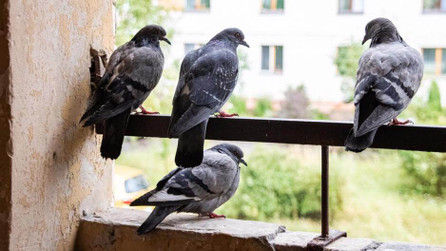
Birds are everywhere. Some people even have bird baths and feeders in their yards to attract the birds. That is fine if they are willing to suffer the consequences. Businesses, however, have more liability to worry about. Birds that tend to roost and nest on the buildings and structures turn the cute little song bird into a pest bird.
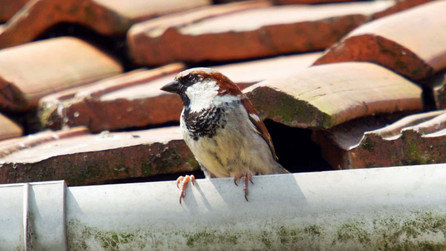
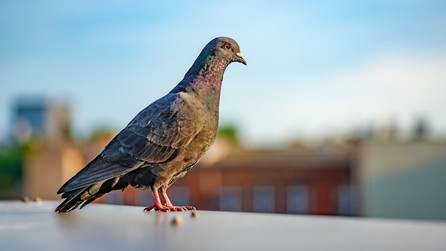
Every year, machinery, roofs, ventilation systems and structures are damaged and sometimes completely ruined by the pest bird and their droppings. Millions of dollars is spent each year to repair and replace what the pest bird has destroyed. Roof damage can be especially costly to replace. Bird droppings are very acidic and eat away at many substrates. Tar-based roofing materials are especially vulnerable to this. It does not take long for the bird droppings to literally eat through the roof. Rooftops are often where the pest bird will build its nests. They like to build their nests away from the weather elements and their predators, often times using drains, roof corners and rain gutters to build their nests and hide in. This often times creates a water build up causing even more damage. With the acidic bird droppings and water this can lead to a roof collapse with disastrous consequences. Pigeons have been known to invade attics of restaurants and other buildings, building colonies of nests. Over time, the sheer weight of their accumulated droppings has caused the ceiling to cave in.
Ventilation systems can also become clogged and blocked by the pest bird debris. When a nest is built in ventilation systems, disease that the pest bird carries and transmits can spread through the airflow. Another health hazard is when birds use fireplaces to nest and roost. The threat to this is when the fireplace is eventually used. Carbon monoxide is then a dangerous substance that can build up becoming deadly to humans and other animals. If nests are allowed to be built near electrical boxes and machinery, fire is always a risk. The appropriate
bird control will save, most importantly lives, and also thousands of dollars of damage.
The corrosive droppings can also damage equipment, solar panels, insulation and air conditioning units. Fresh droppings are dangerous as well creating a slippery mess for any who are near it to slip and fall. The dust created by the dried accumulated droppings are equally as dangerous, if not more so. The dust carries various diseases that humans can get by breathing in the spores that are in the dust which pose great risk to diseases such as Histoplasmosis and salmonella. Bird control can prevent this type of situation from happening.
With proper
bird control in place, pest birds can easily enter a large warehouse, factory and even airplane hangars and cause a lot of problems. If the warehouse or factory is a food related business, the pest bird droppings will eat through plastics and contaminate the food that is already packaged. Airplanes can be severely damaged when delicate parts of the plane come into contact with the hazardous bird droppings.
Businesses that have el fresco dining are at risk of losing customers if their bird deterrent measures are subpar. Birds and their debris can be very disturbing to patrons who want to experience outdoor dining, even at fast food restaurants.
Bird Control Options
Bird Spikes/Bird Slopes/Bird TracksA common
bird control product that used by many is bird spikes. Bird spikes are stainless steel and plastic. There are also spikes specifically used for girders and others for gutters. Bird spikes are a physical bird deterrent that prevents the larger pest birds such as crows, pigeons, gulls, vultures and raptors from landing on fat or curved surfaces. Birds spikes are a permanent solution that keeps birds from landing on ledges, rooflines, eaves, I-beams, awnings, canopies, light posts and signs to only name a few. Stainless steel bird spikes are often recommended by architects, government agencies and contractors and a way to deter the pest bird.
Bird slopes are made of angled PVC panels. The slanted slopes make it difficult for the bird to get their footing. It is slippery and uncomfortable which will cause them to move onto another location. They are ideal for ledges, beams and eaves or any other 90 degree locations where pest birds often land and roost.
The electric track is not as terrible as it sounds. It does give off a mild shock to the bird when it tries to land on the surface where the track is installed, but does not harm the bird in any way. It is completely humane. Electric track could be used in place of
bird spikes when you need the lowest type of visibility of a bird deterrent. Bird spikes and slopes are virtually invisible when installed correctly, but the bird track’s height is only ¼” high at the very highest point. It is very flexible and can bend 360 degrees without compromising the integrity of the deterrent. It is easy to install and is highly successful in bird behavior modification. The pest birds will not come back.
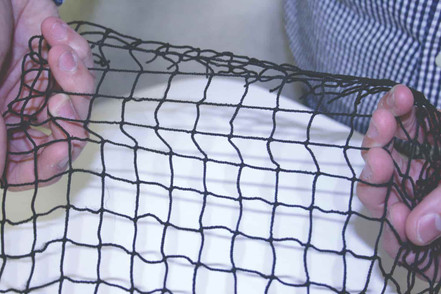
Bird NettingAnother type of physical
bird deterrent is bird netting. Bird netting is very versatile and is used for total exclusion of the pest bird.
Bird netting is effective smaller birds as well as the larger ones. Often times pest birds will get into the hangars or warehouses. Bird netting suspended up above is very effective in keep the pest birds from getting up into the I-beams and hiding away and nesting. It is never too late to use bird netting. If birds are already in the building there is a netting kit that will humanely capture the bird so that they can be released. The netting kit is effective in capture most species of pest birds, large and small. The netting that captures the birds is placed in the direct flight path of the pest birds. They fly into the very thin, mist netting, flying normally. It is also possible and sometimes necessary to use lighting or sounds to make the birds fly into the netting.
Visual Bird DeterrentsIt is always a smart idea to have some type of visual deterrent along with a physical deterrent. This way the pest bird does not get use to one type of product. Visual bird deterrents come in different shapes and sizes. There are scare balloons that are about the size of a beach ball, and there are smaller, flat diverters. There is also a flash tape that comes in a roll. These three visual bird deterrents all have a shiny reflective surface that disturbs the bird visually. The scare balloon and the flat type of diverters have an imprint on the sides that the birds see as a predator’s eye which causes their natural instinct of fight or flight to kick in. Hang them up along with a physical bird deterrent and they will fly away and stay away.
Being proactive and using
bird deterrent products to keep the pest bird away will save thousands of hours in time and money, as well as keep everyone safe.