Availability of Bird Deterrents

Thursday, May 10, 2012 by Kathy Fritsch

get rid of birds with humane bird control productsHomeowners can take rest in the fact that they do not have to re-create how to keep birds away from home.  It has already been done.  Nor do you need to sit outside with a b-b-gun and shoot at the birds in the trees.  In the past, desperate people have used the b-b-guns.  They have also used shiny household items to distract the birds and try and scare them away, and beat on pots and pans to get them moving away.

There are devices now specifically used for bird control in the home.  Reputable bird control companies will help you guide your way through what is needed for your specific issues. 

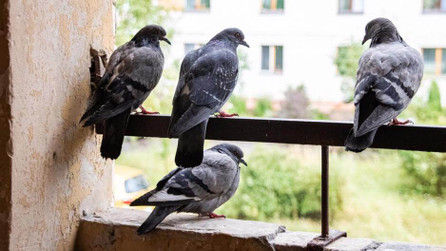
It is not a matter of how to keep birds away from the home; it is the matter of why.  Pest birds only do what comes instinctual to them, which is finding a safe area away from their predators to roost and nest, and also the natural need to eat and poop.   Birds do not care if their eating disrupts and disturbs the home in any way such as making a mess of the trash in open trashcans.  They are also known to eat dog and cat food.  Bird poop is another story.  Not only is it unsightly and messy, but it can be dangerous.  The fresh poop whether it is on the grass or patio cement floor can be very slippery.  There are many incidents each year of slip and fall accidents from fresh bird poop.  If it is allowed to accumulate and dry up, it can also harbor many different types of fungus that can be transmitted to humans causing upper respiratory diseases.  Nesting is the natural action before breeding.

Bird deterrents on the market consist of bird garden netting, goose repellents, woodpecker repellents, bird spikes, and many more bird control products.  Whatever difficulty you encounter with the pest bird, there is absolute bird control for the problem. 

Do not re-create the wheel.  Take time to research the best bird control company that will work with you to determine your needs.


It Is Easy to Bird Proof a Boat

Saturday, May 5, 2012 by Kathy Fritsch

bird free boatsBoating is one of those seasonal sports that people get excited about.  Fishing trips with the guys, family outings on the weekends, and out of town visitors in summer are fun reasons to take the boat out. 

Getting the boat ready for the season includes maintenance checks such as checking the safety gear, fuel systems and fluid levels.  Annual maintenance checks help get the boat out quicker and ensure safety on the seas.

Bird proofing the boat should be on the maintenance checklist.  There are different types of bird control products that can keep the boat free from nesting materials and bird feces. 

A solar-powered bird deterrent uses motion to scare away pest birds such as seagulls, crows and pigeons.  A solar repeller is a unit that has a base that can be mounted to the boat on either a flat surface or an angled one.  They are very easy to install.  There are two metal “arms” that screw right into the top of the repeller cone base.  The arms extend 2.5’.  The solar power causes continuous motion that prevents the bird from landing.  It does not injure the bird, just scares them away.

Another scare tactic to use is a visual bird deterrent such as a reflective bird diverter.  The scare diverter can be hung on the railings and especially the high areas of the boat where the birds like to perch.  The diverters have a “mock” predator eye design on the side.  To humans it is just a nice design, but it scares the bird away.  They also are made using a reflective material that irritates the bird’s visual senses. 

There are also balloons that work the same way and have a similar design.  The balloons are the size of an average beach ball.  Flash tape does not have the design, but the tape is made of Mylar and is a shimmery red.    Like the other visual diverters, the movement of the shiny flash tape annoys the bird.

The low cost and quick installation of these products will ensure a long season of bird free boating.


Backyard Bird Repellent Choices

Thursday, May 3, 2012 by Kathy Fritsch

get rid of birdsThe right choice of bird repellents is environmentally friendly, safe and humane, and cost effective.  The whole idea of repelling birds from your backyard is to do this as easily as possible.  Harming the bird does not have to be an option.  Often times you see in movies or on the news people shooting birds with a b-b-gun, which is not even legal.  Most migratory birds are protected under the Migratory Bird Treat Act that states that it is illegal to pursue, hunt, take, capture, kill or sell birds listed as migratory birds.


Migratory birds on the list include the Barn and Cliff Swallow, Downy Woodpeckers, sparrow, crow and Canada Geese, this just about sums up the birds that cause the most havoc in backyards across the nation.  It is not that these birds are not liked, especially the woodpecker.  It is a beautiful bird.  What most people do not realize is the woodpecker house damage that can be done if the woodpecker is left unchecked.  There are, however, goose repellents, woodpecker control and bird repellents that get rid of woodpeckers and the rest of the migratory birds.
 

To choose the right bird repellent, you must first determine the culprit, and then the location they are roosting and nesting. Is the garden being eaten before you have a chance to pick the ripe berries and vegetables?  Is the fruit trees infested with roosting birds?  Garden netting would be the choice.  Garden netting blocks the birds from reaching the fruit.  Garden netting can even help block areas including the eaves of the home, rooftops, balconies and garages.  Woodpecker netting would help save the side of the home from woodpecker house damage.
 

If you have a large backyard, and if there is any kind of water source, the Canada Geese might find your location quite easily.  The goose repellent can be a sonic sound device that broadcasts the distress and predator calls through speakers around the yard.  This will get rid of geese and keep them away.
 

Adding scare tactics alongside the netting and sound bird deterrents is a good idea.  This will keep the birds, any birds, from getting use to one particular bird control product.

Preventing Woodpecker House Damage

Wednesday, May 2, 2012 by Kathy Fritsch

get rid of woodpeckersWoodpeckers are a very familiar group of birds.  The ability to peck and drum into trees in search of food or excavate nest cavities is well known.  They prefer partially dead trees for nesting sites, but they will readily peck holes in wood structures in search of insects beneath the surface.  This includes the side of your home.

Woodpeckers also have characteristic calls.  They use their rhythmic pecking sequences to make their presence known.  The rhythmic drumming establishes their territory and also attracts and signals their mates.  Woodpeckers breed in spring, commonly laying 3 to 6 eggs.  Incubation is very short, lasting only 11 to 14 days.

If you live in an area that is known to have woodpeckers, it is best that you protect your property at the beginning of spring, or even a little before.  Woodpecker house damage is likely to occur especially if your home has a wood exterior or in suburbs near wooded areas or in rural wood settings.  You could have as many as six to eight birds drumming on your home during a season if you have not protected the home with some type of woodpecker repellent.

Bird Control can consist of a physical deterrent that would block the woodpecker from being able to drum and also objects that would frighten the bird away.  A combination of both is often suggested. 

There are woodpecker kits that contain bird control products such as visual bird deterrents to frighten the woodpecker away.  Scare balloons and flash tape are included in the kit.  They can be hung on the side of the home, or any building.  They are ideal for under eaves and can be easily hung in any tree as well.  When the woodpecker sees this visual distraction, they become confused and frightened, and will want to avoid the area.  Woodpecker bird netting along side the visual deterrents would bar the woodpecker from drumming on the side of the building.

The objective is to get rid of woodpeckers not to harm them.  Woodpeckers are classified as migratory and are protected by the Federal Migratory Bird Treaty Act. Woodpecker bird control is the best option. Bird netting and visual deterrents will do the trick.


Spring Bird Control – Here Come the Geese

Sunday, April 22, 2012 by Kathy Fritsch

Get rid of geeseSpringtime rolls around every year.  This means as seasons change, the birds begin to arrive chirping in our yards.  Not only do they chirp, but also they look for mates, build nests, raise their young and then fly into the winter until springtime rolls around again.

Canada Geese start the process in early springtime.  In North American, geese are becoming increasingly more common.  With all the beautiful lawns, parks, and large backyards, geese are seen as a nuisance, goose control is essential, especially if there is a water source nearby.  Geese build their nests on the ground out of twigs, bark and grass, and they tend to flock back to the location where they were born.

Before they arrive back is the time to implement goose control.  Goose control can consist of a combination of visual deterrents and sounds deterrents.  Both of these forms of goose control will not harm the bird in any way just scare them away.  It is also necessary to change up the deterrents from time to time so that the nuisance geese do not get too use to any particular product.

Predator eye balloons and diverters are visual goose deterrent that can be placed around the property.  The predator eye balloon frightens the geese and other pest birds away with its shiny reflective surface as well as the design that looks like a predator’s eye.  The movement and the design get rid of geese by making them fly away in fear.

Bird diverters do the same thing but they are a different shape.  Bird diverters are a little more un-assuming bird control product, but gets the job done.  The design on the side is, again, a mock predator eye that frightens and gets rid of geese, making it a goose repellent.

Sound goose deterrents work well in very large places.  The sound deterrent units are programmed to play goose distress calls and predator calls every few minutes to alert the geese of danger.  When the geese hear the warnings, their natural instincts tell them to flee the area. Geese deterrents work well, especially the sound goose deterrents.

Springtime will arrive, but the geese will leave.


Plastic Bird Spikes are Green

Tuesday, April 17, 2012 by Kathy Fritsch

plastic bird spikes“Going green.”   You often hear this talked about.  People want to create a better world for themselves and future generations.  A few simple changes in lifestyle and anyone can make the move to greener living.   

For some, reducing the carbon dioxide emission by switching from passenger cars to buses, bicycles and trains is doing their part.  Gardeners add compost material which adds beneficial nutrients to the garden soil which improves the ability to retain water and it acts as a soil insulator.  

Use of bamboo products is considered greener because it promotes the reforestation and expansion of bamboo, which consume airborne carbon dioxide at a higher rate than other trees.

Then there are more mainstream ways to be greener such as recycling, CFL light bulb usage, and the switch to solar energy.

Bird control products that get rid of the woodpeckers and other pest birds around the home can also be considered green.  They are safe and humane for the bird and the homeowner and family.

Products such as plastic bird spikes are made of 100% post-industrial plastic materials.  Discarded scrap plastic is ground up and reformed into pellets, which then creates a strong eco-friendly bird repellent spike.  The plastic bird spikes can be applied to canopies, under eaves, fence lines, ledges, rooftops.  Installed on any flat or curved surface will keep the area bird free.  They especially prevent the bigger pest birds such as the pigeons, crows and seagulls from landing on the area that the spikes are installed.  They can be applied easily and quickly with either adhesives or screws, or tied into place.  Plastic bird spikes also come in a variety of colors to match the structures around the home.  When installed correctly, they are virtually invisible.  But, this type of bird spike is always green.

You don’t have to be a big company or a diehard environmentalist to make a change in the world.  Everyone can make a move towards greener living and a healthier world.


Spring and Summer Preparation - Bird Control

Tuesday, April 17, 2012 by Kathy Fritsch

get rid of birdsDo you have fruit trees in your backyard that are getting ready to bear fruit this coming spring and summer?  Are you afraid the pest birds are going to eat the “not so ripe” fruit and leave you with nothing?  This is a real fear for a lot of backyard gardeners.  

This time of year is for new growth and new adventures.  It is a time when celebrations start occurring outside.  It is definitely the time to get the backyard in order, so that the outdoor events will run smoothly, seemly and clean.

Hosing off the patio furniture and bringing out the cushions is one way to start preparing.  Cleaning the cement is another.  Proper installation of bird control products is a must.  This will ensure that the area remains clean throughout the summer.  

Bird control products that are properly installed will keep the birds from roosting and nesting and pooping on your property.  Bird droppings can be very unsightly.  But along with unsightly, the new droppings are slippery and can result in slip and fall accidents.  The older accumulated droppings can harbor fungus, parasites and diseases that can be transmitted to humans.  Avoiding both of these problems is just a matter of applying bird control methods in the yard.

Visual bird deterrents are an excellent choice to use along with physical or sound deterrents.  Visual deterrents such as flash tape, scare balloon and scare eye diverters will frighten the birds away.  The way they get rid of the birds is by their unique design.  They have shiny reflective surfaces that create a visual distraction zone.  The flash tape also makes a crackling sound when it moves in the breeze.  Birds are very susceptible to sound disturbances.

Pairing the visual bird deterrents with a sound bird deterrent is extremely successful in repelling the birds from the property.  Sonic devises are available that play distress and predator calls at intervals.  The broadcasted calls alert the birds in the area to stay away.  

Using both the sound and visual deterrents, and occasionally moving around the visual deterrents will keep the property bird free all season long.


“Greener” Gardens with Bird Control Solutions

Saturday, April 14, 2012 by Kathy Fritsch

garden bird nettingIf you are planning a spring garden in your backyard, you are most likely looking at a more eco-friendly “green” garden.   A backyard buzzing with life and activity is a way to do your bit in promoting a healthy planet.  Organic gardening does not have to be difficulty.  Gardening is meant to be enjoyable and is a way to relax with a little bit of healthy exercise in the open air. 

Growing some of your own produce is also extremely rewarding.  Like anything that is done in nature, there are problems that can arise.  Pest birds can still be a nuisance and destroy your hours of labor in a short period of time.  But with preparation and right timing, even bird control measures can be “green.” 

When planning out the garden, it is also wise to plan out how to keep the pest birds away.  Clean and humane bird control should be a priority.  Bird control products that do not harm the bird, plants, household animals or people are desirable. Safe and humane bird control for gardens consists of bird spikes, bird spiders and solar bird repellers. 

The Bird Spike Solution

Plastic bird spikes are a humane physical bird deterrent that helps keep birds away.  Don’t let the word “spike” fool you into thinking it can injure the bird or the person installing the plastic bird spikes.  It is not the spike itself that keeps the pest bird from the area, but the amount of them.  The larger pest bird, such as the pigeon and crow cannot land where the plastic bird spikes are installed because they do not like the uneven surface and cannot comfortably stay there or fluff and expand their feathers.  They are made for outdoor endurance.  The bird spikes are U.V. protected and will not be affected by extreme temperatures of hot or cold.  Once they are correctly installed, which can be as easy as gluing them down, they are virtually invisible and will not take away from any aesthetic appeal from the home.  They also come in various colors to help with invisibility aspect of the bird spikes.  They also come in varying widths so that they can be easily installed on different size ledges, rooftops, fence lines, canopies and even under the eaves of the home.  Under the eaves is especially important to protect.  This is where the pest birds like to hide away from their predators and where they are likely to build nests.  Protecting this area before the nests are built is crucial.  It is illegal to remove nests once they are inhabited. 

The Bird Spider Solution

The bird spider is what the name implies.  A spider has many legs, and the bird spider does also.  The bird spider acts as a physical deterrent as well as a visual bird deterrent.   The bird spider’s “arms” move and bounce with the breeze. The diameter of the “arms” are from 2 foot up to 8 foot depending on the area you are placing the bird spider deterrent.  If placed on the roof top or skylight, the larger arms would be better protection.  If placed on top of a table near the patio or pool and hot tub, a smaller “arm” would work.  The spacing of the “arms” prevents the larger pest birds from landing, which is the physical deterrent in action.  The movement of the “arms” in the breeze is the visual deterrent which creates an uncomfortable area for the birds scaring them away.    The bird spider’s “arms” are very thin, stainless steel that stem from a round PVC base.  It is very unassuming and will not be distracting to people, only the pest birds.  Bird spiders are often seen on boats and docks.  There is a special base made for boats which makes the bird spider quite adaptable to different environments.

The Solar Bird Repeller Solution

The solar bird repeller is similar to the bird spider in that the repeller has an “arm”.  The “arm” in this case is a 5’ telescoping “arm” that is mounted on the repeller base and continuously spins.  The birds are frightened by the constant movement and will want to avoid any area where the bird repeller is in action.   Again, you will see this often on docks and boats, but is ideal also for roofs, A.C. units, skylights and chimney caps.  Again, the top of the roof and the ledges are where the bird is going to give itself that “bird’s eye view” to determine the vicinity for food.  Keep them off the high areas around the home, and you’ll keep them out of your yard all together.  The solar bird repeller has an on/off switch and can be working all evening long.  Once the solar aspect of the bird repeller is charged fully, it will operate during the dark times which are when the birds will try to hide away from their predators.  With bird control measures in place, they will be forced to find another location.

Believe it or not, protecting all these areas of the home will protect your whole yard, especially the treasured garden.   Birds want to find roosting and nesting areas close to their food source.  If they are forced to find alternative housing options, they will be forced to find a different food source as well.   Safe and humane bird control solutions are another way to ward off the pest bird and help maintain a “green” garden.  Be a successful backyard gardener and show off that green thumb. 


Why Bird Proofing the Home and Boat in Spring is Important

Tuesday, January 24, 2012 by Kathy Fritsch
get rid of birdsDeterring pest birds in spring is a smart move.  The longer the delay, the more likely the pest bird is going to build its nest.  Once the nests are built and active it is illegal to remove them according to the Migratory Bird Treaty Act of 1918.  Even if the nests are in inconvenient locations or underneath the nest are piles of poop, it is still illegal.  Preventing pest birds from making your home or boat their home is as easy as applying bird control measures that will get rid of the pest bird and keep them away.  There are different ways to achieve the goal of getting rid of the birds.   There are visual bird scarers that frighten away the pest bird, physical deterrents that block them from the location and bird sound deterrents that trick and scare the pest bird into thinking they have come in contact with their predator or they are hearing distress calls from their own species.  There is a bird deterrent for every area that may become infested by the spring migratory bird.

Visual Bird Scarers

One bird that is a nuisance in spring is the woodpecker.  They attack the side of your home or other buildings, under eaves and in your trees.  There are woodpecker kits that contain visual scare devices that can be easily hung in the susceptible areas.  A vinyl balloon that is of bright colors and has a reflective surface can be hung in fruit trees, or any tree that the woodpecker and other pest birds are flocking to.  The scare balloon has an imprint on the side that appears to be a predator’s eye to the birds.  The colors and the reflective shiny surface cause a visual disturbance that the birds will want to avoid. They are easily installed by simply hanging them with twine.  They can even be partially filled with water and float in the backyard pool.  These scare balloons are often seen attached to post surrounding water holes on golf courses and parks to keep the pest duck away.  They can also be attached to the high points on a boat to keep the seagull from landing and making a mess with their droppings as they perch and roost or nest.

Flash tape is another type of visual bird deterrent that is included in the woodpecker kit.  Flash tape is a very effortless way to scare the birds away.  Flash tape is an iridescent red Mylar film.  When it moves in the breeze the sun reflects off the tape and creates a visual distraction zone to the bird.  It also has a crinkling sound that is annoying to the bird as well.  Flash tape is easily applied to trees, balconies, patios, overhangs and, again, the boat.  

Springtime brings about outdoor gardens and entertainment in the backyard.  A hawk decoy is a visual deterrent that can be place in the yard and garden.  The hawk is a life-like red-tailed decoy that scares birds away from these types of open areas.  The Red Tailed Hawks are known to hunt during daytime hours, so it is a very identifiable predator to most pest birds.  The hawk decoys are long lasting, made of durable plastic, that is meant for outdoor use.

Physical Bird Deterrents


A bird spider is both a visual deterrent as well as a physical bird deterrent.  A bird spider has “arms” like the arms of a spider, but the bird spider arms bounce around and sway with the breeze.  The movement of the bird spider is what creates the commotion that the birds do not like, and they will fly away from the area.  There are different sizes that will work in various areas around the home and boat.  The sizes are 2’ arms, 4’, 6’ and 8’.  The stainless steel arms stem from a round PVC Base.  There are special bases that are used specifically on boats that can be mounted on masts or spreaders.  Other places bird spiders can be used are near pools and Jacuzzis, rooftops, air conditioning units and skylights to only name a few.  

Another bird control product that is similar to the bird spider is a solar bird repeller.  The idea is the same, moving “arms” that distract and frighten the birds away. The solar bird repeller has a 5-ft telescoping “arm” that spins continuously.  This would keep the bird away day and night.  Getting the solar bird repeller to work properly only takes a full day of sun to charge the rechargeable batteries that keeps the power stored during dark periods.  The solar bird repeller is very easily installed and can be secured to a flat or angled surface.  They are also ideal on boats, especially those boats that are docked in the water.  Often times the repellers are mounted onto the edges of docks themselves.  You can also mount them onto roofs, skylights and air conditioning units.  

Bird Sound Deterrents


Bird sound deterrents are devices that are designed to get rid of pest birds in large open areas.  A large backyard with a beautiful garden would be the perfect instance to use a bird sound deterrent.  A bird sound deterrent can be programmed to play over 22 different types of species.  The sounds that are played are distress sounds and predators calls.  When the birds hear these sounds and calls, their natural born instinct is to flee the area.  Common birds that can be programmed are woodpeckers, pigeons, sparrows, crows and starlings and grackles.  The bird sound deterrents are sun and weather resistant for outdoor use.  With adaptable speakers, the coverage of bird control is up to 5-acres.  A lot of families are fortunate enough to live in areas with wide open spaces and sometimes even ponds in the backyards.  The bird sound deterrent is ideal in this type of location.  It will even keep the geese out of the pond. If the geese are the main problem in the area, there is a bird sound deterrent that is made specifically to keep the geese away.

Bird proofing the home and boat, small yards and larger areas is a safe and humane way to keep the birds away so that when spring is sprung, the bird deterrents are in action and the bird dropping mess stays away from your area, and outdoor activities are clean, safe and peaceful.

Two Easy Ways to Achieve a Bird Free Boat

Tuesday, January 24, 2012 by Kathy Fritsch
bird free boatsJoining in the ranks of boat ownership is a great feeling.  There is no better sensation than taking the vessel out into the open sea in spring time; the cool wind whipping past your face, feeling the slight sprinkles of salt water on your skin.  Along with the fun comes responsibility.  Boating is a sport that can be time consuming and expensive.  With the cost of gas, life jackets, licenses and permits, fishing gear and insurance to name a few, taking care of what you have requires groundwork.

Maintenance is a key factor for boat owners.  Spring is the time of year for the annual preparation and cleaning for millions of boat owners.  Annual maintenance prevents problems and delays in getting the boat out into the open sea.  Bird control should always be included along with the yearly checkup of safety gear, fuel systems and fluid levels.  There are two different bird control methods that will keep your boat bird free. 

Visual Bird Deterrents   

    Reflective Bird Diverters


Visual bird deterrents that will help achieve a bird free boat consist of methods that will scare the bird away and get rid of the bird from your boat.  Visual bird deterrents such as reflective bird diverters, predator eye scare balloons and flash tape are objects that can be hung on the railings, and especially any high areas on the boat.    Reflective bird diverters frighten the bird away with the mock predator eye design and the shiny reflective surface.  Both work in unison to make the pest bird visually uncomfortable.  It is effective for both small and larger bird species.  They are durable and can be left in use and can also be easily stored away. 

    Predator Eye Scare Balloon


The scare balloon acts as a bird deterrent in the same way as the hanging bird diverters.  The scare balloon is a vinyl balloon.  It is about the same size as the average beach ball that children play with.  It has very bright colors that are very easy for the pest birds to see.  The design on the side of the scare balloon is a mock predator eye.  The vinyl material also makes the scare balloon have a shiny reflective surface.  All features of the balloon will have the pest bird confused and frightened.  They will fly around this visual distraction to avoid the area and stay away.

    Flash Tape

Again, scaring the bird away, not harming them is the goal of strategic bird control.  Mylar flash tape that is an iridescent red will do the trick.  Strips of flash tape can be placed anywhere on the boat, the higher the better.  Like the diverters and scare balloons, the flash tape creates that visual disturbance for the pest bird.  Not only does the flash tape move in the breeze having the sun reflect of the tape causing irritation to the bird’s sense of sight, but there is a sound when the flash tape moves.  It is a crinkling like sound that is another irritant that they will want to avoid.  As for the boater, the flash tape and other visual deterrents create almost a festive look on the boat; if you happen to notice them at all it is a very unassuming way to keep your boat bird free.

Physical Bird Deterrents

You might be asking yourself about ensuring a bird free boat at night when it is dark out and there is no breeze.  A physical bird deterrent is something that blocks the pest bird from any given area.  This would be a successful means of keeping a bird free boat during dark times.  There are cross between bird control products that address both visual and physical deterrents.

Solar Bird Repeller


A solar bird repeller only takes a full day of sun to charge the 2-AA rechargeable batteries that will last during the dark periods.  The solar powered bird deterrent uses continuous movement to get rid of the pest birds.  The solar bird repeller is a portable unit that has a 5 foot long “arm” that spins continually when turned on.  The movement of the arm is what keeps the birds away from the area.  The “arm” movement is the physical aspect that keeps the bird from landing and movement is the visual disturbance that frightens them away. 

    Bird Spider


A bird spider works the same way as a solar bird repeller in the aspect as it acts as both a physical deterrent as well as a visual deterrent.  The bird spider has optional bases, including a boat base for easy installation on masts or spreaders.  You can purchase this bird deterrent in four different sizes depending on the area you are protecting.  The bird spider’s “arms” come in 2’, 4’, 6’ and 8’ sizes.  These “arms” move and bounce around in the breeze.  The movement keeps the birds, especially larger birds such as seagulls, from landing near the movement.  Again, they are frightened away.

Scare tactics to get rid of birds to obtain a bird free boat does not harm the pest bird.  It is a safe and humane way to protect your investment of the vessel.  The low cost of the physical and visual bird deterrents will keep you boating all year long.  Making it a part of your winterizing and de-winterizing check list will make certain that your boat will not only be clean but safe a bird free.

Golfing Without Geese

Thursday, January 12, 2012 by Carolyn Griffin

By Carolyn Griffin

Get rid of birdsDuring the past few decades, golf has gained in popularity as a recreational pastime and as a passion. Golf courses comprise a variety of habitats. All areas of the golf course are a habitat—even tees, greens and fairways. When pest birds, such as geese, inhabit golf course properties, many golf course facilities make the mistake that non-intervention is the best option; however, intervention and management is the preferred bird control method. Over the past ten years, one of the main challenges for golf course owners is being environmentally sensitive. 

The geese population has increased in urban and suburban areas in recent years, and they are often considered pests. Geese feed by grazing in fields and large lawns, and they are often seen in flight moving in pairs or in flocks, often in a “V” formation. Their habitat is found anywhere near lakes, rivers, ponds, or other small or large bodies of water, such as those found in golf course communities.

With a life expectancy of 25 years, geese spend most of the day foraging for food, which is primarily obtained by grazing. They like short grasslands next to a body of water and prefer fertilized grass for feeding. This is what attracts them to golf courses, playgrounds, and other well-maintained lawns.

Goose control products that will deter geese from inhabiting golf courses and other grassy areas include goose repellents and super sonics. 

The goose repellent is applied to grass areas where geese have become a nuisance. You can treat grass areas where geese graze. Geese cannot stand the ingredient (grape extract, methyl anthrantitate), yet the product is safe for pets and humans. The extract irritates the goose’s trigeminal nerve and mucous membrane when a goose eats the product. Because geese do not like this sensation, they will leave the treated area.

The repellent is beneficial as it keeps property clear of pest geese and their droppings. This low cost, effective, and successful goose control solution works when geese eat the distasteful treated grass, thus impelling them to leave the area. The goose repellent is simple, easy to apply, and rain and water resistant. Finally, the product is safe and non-toxic: it will not harm humans, ducks, geese, or other animals.

The goose sonic scares pest geese with loud sounds such as distress and predator calls. The bird sonic is species specific as it allows you to choose the pest bird you are trying to eradicate. With a controllable volume, this product covers between one-six acres, is sun and weather resistant, and works day or night. You simply program the unit for your pest bird.  The specific goose sonic keeps pest geese off your property, and it comes with two free satellite speakers. Finally, the cost effective and affordable goose control sonic is the lowest cost sonic system on the market.

The goose repellent and the goose sonic are two humane and simple methods to keep your golf course free of nuisance geese and their droppings. The benefits are two-fold: you can make your golf customers happy as they can play on a sanitary course which means greater profits for you as you will increase your profits from repeat customers.  Thus, "Golfing Without Geese" by using goose control products translates into satisfied customers.

The Need to Control Birds

Thursday, January 12, 2012 by Kathy Fritsch
Get rid of birds with bird control products“Free as a bird.”  That is a very common quote.  What does it mean?  When it comes to pest birds it means the bird has no boundaries.  It means the pest bird can fly and perch, nest and roost wherever they find contentment.  Creating an uncomfortable area with bird control is the safe and humane way to get rid of birds.

Reason for Bird Control

One of the main reasons it is important to put bird control into action is that pest birds can do a lot of damage.   Birds like to roost and nest in the trees, roofs and eaves.  The destruction they leave in their wake can be quite expensive and put you at a health risk.   What they leave behind are their white pasty droppings.  Accumulated bird droppings are known to harbor over 60 different types of viral, bacterial and fungal diseases.  The diseases transfer to humans and can generate seriously illnesses.  West Nile Virus is one such illness and can cause severe neurological effects that may be permanent.  Cryptococcosis and Histoplasmosis are two yeast-like funguses that can be acquired from the bird droppings.  The bird droppings are also highly acidic and corrosion will take place wherever they fall.  They will corrode paint, wood, steel and even concrete.   You can imagine the time and cost to replace or repair the damaged areas.  Bird control will not only keep that unsightly mess from existing, but will also protect against the development of health problems.

How to Bird Proof

It is first necessary to assess the property that is being invaded by the birds.  Are there trees that are full of birds?  Are they perched on top of an awning in wait of food spillage?  Maybe the problem area is under the eaves.  No matter where the pest bird is a problem, there are bird proof methods to deter the birds and soon they will fly right on over and beyond your property.    There are basically three types of bird deterrent methods.

Physical Bird Deterrents


A physical bird deterrent is simply a bird control product that blocks the bird from its desired landing spot.  Bird spikes are a good example of a physical bird deterrent.  Bird spikes are very successful in keeping away the large pest birds such as pigeons, crows and gulls and keeping them from perching, nesting and roosting.  Construction grade adhesive will secure them down to concrete, steel and brick.  Screws can be used to secure them to wood surfaces.  They are virtually invisible when installed correctly.  What helps with the aesthesis as well is the plastic bird spikes come in various different colors to match their surroundings.  They also come in various widths and lengths that fit it just about any area that has a flat or slanted surface.   They are especially ideal for use on a patio covering where there is al fresco dining or even your own home patio coverings.

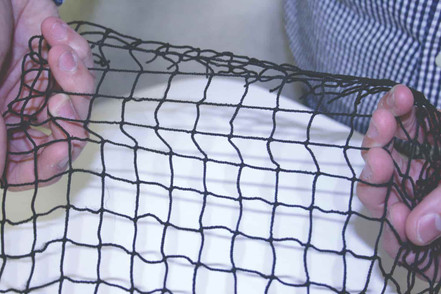
Bird netting is another physical bird deterrent that works especially well for protecting vegetation.  Many vineyards use bird netting to protect the precious grapes from being eaten by the birds.  It is recommended that you suspend the netting over the vines by at least 6 inches.  This prevents the birds from landing on the mesh and putting their beaks through the mesh to get at the fruit.  Bird netting is also proven to deter the pest bird from home gardens and fruit trees.  Heavy duty bird netting is ideal for warehouses, garages, rooftops, factories and bridges.  Heavy duty bird netting is professional grade bird netting.  Most bird netting is made of a U.V. stabilized mesh, rot proof, water proof and flame resistant.

Visual Bird Deterrents

Visual bird deterrents create an optical illusion that scares the pest birds away from the area.  Visual deterrents such as a diverter or scare balloons have a printed design on the sides of them which, to a bird, look like a predator’s eye.  The mock predator eye design on the visual deterrents confuses and frightens the birds.  In turn, they fly away and will want to avoid the area.  They can be hung along the side of homes, buildings, in trees and even on boats to get rid of the pest bird.  Flash tape is another visual deterrent that can quickly be applied.  It is a iridescent red foil Mylar tape that that can be cut into strips and attached to trees, outdoor patios and pool areas to name only a few places.  The tape moves in the breeze and makes a crinkling sound which simply frightens the bird away.  Using the same principle, solar powered bird repellers can be placed on signs, streetlights, A.C. units and swim platforms.  The solar bird repeller uses movement to scare away the birds.  It has 5-foot telescoping “arms” that spin continuously.  The rotating arms move even at night using solar power, but it also has rechargeable batteries for operation during dark periods.  The repeller is easy to mount and can even be mounted on an angled surface.

Sound Bird Deterrents

Sound bird deterrents are for large open spaces such as courtyards, warehouses, patios, backyards and even golf courses.  A sound device plays distress and predator calls.  Like the visual deterrents, the sound deterrents, too, scare away the birds.  The units can be programmed to broadcast over 22 different types of bird species.  If you are unsure as to which bird to deter, there is a “general” setting that covers a multitude of bird species.  There are additional adaptable speakers that will cover up to a six acre area.

Physical, visual and sound deterrents get rid of birds in unwanted areas.  There is no harm done to the bird or installer.  Using humane bird control methods is abiding by the law.  It is unlawful to remove birds once they have built a nest.  It is important to start thinking of installing bird control products in early spring before they make themselves at home at your place of business or home. 


Bird Netting will Decrease Pest Bird Damage

Thursday, January 12, 2012 by Kathy Fritsch
get rid of birds with bird nettingThere are major problems associated with pest birds.  Municipalities, vineyards and groves all continuously have problems with pest birds when there is no bird control measure in place.  Birds are labeled pest birds when their presence interferes with business or pleasure.  The interference can be quite detrimental to both health and property. 

The bird’s feces are what cause damage to the property.  Without bird netting to protect against roosting and nesting pest birds, these birds will roost and nest leaving behind their feces.  Birds excrete their feces in the form of uric acid rather than urea.  The uric acid exits in the form of crystals that look like white paste.  When you see the spattering of this white paste all over, you know that this is an area in trouble.  Birds have an extremely high metabolism rate and they need to eat large amounts of food.  This entails large amounts of poop.  It can accumulate quite quickly when there are large roosts.  Uric acid is corrosive and will eat through and damage awnings, concrete, metals, wood and paint.  The unsightly mess will be quite costly to clean and repair.  Having bird netting in pin point locations will discourage the bird from roosting and nesting.

Another major hazard of bird poop on your property is the health issues that can arise from the accumulate feces. There are fungal diseases such as Histoplasmosis that humans can be susceptible to when coming into contact with dried bird feces.  It is transmitted by breathing in the spores that are released when the bird droppings are disturbed.  Mites, bedbugs, ticks and other insects that can cause disease and discomfort can be found in bird debris, roosts and nests. 

It is easy to see how damage to produce and food can come to be.  Bird netting will save vineyards and groves from the unwanted pecking of the pest bird, deeming the fruit and product useless.  Bird netting is a simple solution to a huge problem. 

Bird netting will exclude a wide range of bird species.   There are different kinds of bird netting as well, heavy-duty bird netting and no-knot bird netting.  There is even special netting made to block bats.  There is 4 inch mesh that works well for gulls, 1 1/8 inch mesh that is successful in deterring blackbirds and starlings, and then ¾ inch mesh for the smaller sparrows and swallows.  There are various weights of the bird netting and various colors as well.  The various colors can be matched to the area that the bird netting is protecting, making it virtually invisible.  The various colors of the netting will blend in extremely well with the aesthetics of the environment. High quality netting is made with specially treated polyethylene and is U.V. protected.  Most netting is also rot-proof, waterproof, flame resistant and sub-zero stable. 

Following specific guidelines when installing any bird netting will increase effectiveness. For instance, when protecting vineyards, it is advices to allow for space between the plant and the bird netting.   This will keep the bird from perching on the netting itself and poking its beak down between the netting to get at the fruit.  The bird netting can be easily suspending above the vines which are attached to poles that are secured into the ground.  When applying bird netting to areas of buildings such as eaves, make sure the netting is secured without leaving any drooping or sagging areas where the pest bird can breach the barrier. 

As you can see, one very effective resolution is bird netting. It is both humane and environmentally friendly, leaving behind pesticides and aroma repellants which can harm birds, and in many areas it is illegal to do so.  Apart from of your pest bird problem, the advantages of bird netting are diverse.

High Tech Bird Deterrents Needed for the Bird Brain

Monday, January 9, 2012 by Kathy Fritsch
get rid of birds with bird deterrentsMost people will agree that pest birds can be annoying and loud, destructive and sometimes hazardous to one’s health.  Because of the problems the pest birds can cause, people have devised clever ways to keep the birds away and to keep them from landing, nesting and roosting on valuable property, businesses and homes. Bird deterrents range from being as simple as flash tape or as high tech as solar and electric systems. 

Man will always outsmart the bird, however.  With modern technology the methods are becoming more and more sophisticated.  Electric track bird repellants rely on electrical conductivity to discourage pest birds from landing on a surface.  The electric track systems deliver a very mild and harmless jolt of electricity which only irritates the bird enough to send him flying off to find a more comfortable location.  The electric track systems can be mounted on signs or billboards, rooftops and ledges.  They can be installed on any flat or curved surface.  The shock track is made from a flexible U.V. protected PVC base that conforms easily to any straight surface or curved area. The birds know it is there but with the discreet design of the system and the different colors that the systems come in makes this high tech bird deterrent virtually invisible to the naked eye from the ground.  Where aesthetics are a priority, there is a flat track that does the same thing as the electric track system, but the flat track, at its highest point, only measures ¼” in height. 

Another type of bird deterrent that is above and beyond the tried and true methods is the bird spider.  The bird spider has batteries, but it also runs using solar power.  You might have seen the bird spider on television on Ask This Hold House.  The bird spider is ideal for any flat surface such as skylights, air conditioner units, light posts, signs and rooftops.  The spider’s arms come in sizes from 2’ up to 8’ in length.  All sizes are portable so they can be removed and stored away easily.  How the bird spider works is the “arms” sway and bounce in the breeze.  The movement of the arms is what irritates the birds because the movement does not allow them to land on the surface near the bird spider deterrent.  They will not want anything to do with the movement of the spindly arms.

The tried and true methods still stand today, however.  Bird scare deterrents such as flash tape, scare balloons and bird diverters still deliver the punch to the bird’s senses.  Bird spikes and bird netting is especially still a highly effective way to block birds from unwanted areas.  Bird spikes and bird netting is especially effective for large warehouse settings and high buildings where the birds prefer to land.

No matter which method you choose, make sure you purchase the bird deterrent products from a reputable company that has excellent customer service and access to installation experts.  If there are any questions about any products, getting a quick and efficient answer will save company time and protection from pest birds that will last.  Once the products are in place, whether you choose the higher tech systems or the tried and true, rest assured the birds will be flying on by to find another location to call their home.


Golf Course Protection using Bird Deterrent

Monday, December 19, 2011 by Kathy Fritsch
Get rid of Geese

Golf and nature go hand in hand.  Golf is a game enjoyable by the beautifully sculpted designs and landscapes.  Golf courses employ around the clock maintenance to keep the greens green, fairways mowed and the scenery spectacular.   Thousands of hours of maintenance are put into golf courses to keep them in top form. 

There are a few incidents that can ruin a golfer’s game; bad shots, which nobody can control but the golfer his or herself, and birds.  While birds are part of a healthy ecosystem, golf courses attract more than their fair share of them.  Larger birds such as geese and ducks find the man-made water hazards not at all a hazard.  They find the water hazard a perfectly fine pond to spend time in.  If bird control is no where to be seen or heard, the population of these geese and ducks will skyrocket in no time.  Not only are they migratory, but they prefer to nest in the same place every year.  Once these nuisance birds make the golf course their home, it can be difficult to take back the territory.

Taking control is important.  If not, the bird’s unsightly droppings will be all over the golf course and create a hazard of a different kind.  Pest birds and their droppings harbor many different transmittable diseases.  The last thing anyone needs is to bring back to the home anything other than a nice low golf score.  Since golf is a sport that can be played at any age, there are a lot of elderly golfers.  If they brought home the diseases to family members that are ailing, especially with any immune issues, it could be a serious issue.  Where there are roosting and nesting pest birds, there are also parasites and bugs.
The importance of bird control is vast.  The solutions are simple.  There are various methods for repelling the birds from golf courses.   There are technologies that include sound deterrents and visual deterrents.   To achieve total success in bird proofing the course, combinations of bird control products and methods is suggested to produce the greatest results.

Sound Deterrents

Sound deterrents use the natural sounds of the birds to scare them away.  The sound bird deterrent units have speakers that transmit sounds of the pest bird’s predator calls and their own species of distress calls.  There are sonic sound deterrents that are made to get rid of only geese.  The other sonic sound deterrents have a variety of birds programmed into the unit.  There are over 20 different species that can be deterred using the sonic sound deterrent.  And many times people do not even know what bird is causing all the havoc, so the sound deterrent units can be programmed to play calls of a variety of birds to scare them all away.  The sonic sound deterrent specific to geese calls is ideal for the golf course.  The unit covers a lot of ground and there are satellite speakers included, and more speakers can be purchased to cover even larger areas.  The units themselves are constructed of a very rigid material specifically suitable for outdoor use.  The sonic sound deterrents are weatherproof and very easy to use.  There is an LCD screen that helps guide the user to program the unit without difficulty.  You do not have to be a computer scientist to work the unit even though ornithologists and major universities developed this latest technology in bird control.  They can be programmed to play the distress and predator calls during the day or night or both, whatever the need might be.

Visual Bird Deterrents


A visual bird deterrent along with the sound deterrent will increase the successfulness of getting rid of the pest bird and keeping them away.   The water hazards are a perfect place to place the visual bird deterrents.  By placing scare balloons and diverters sporadically around the water hazards creates an invisible barrier that the birds will not want to get into the middle of.  Scare balloons are exactly what they sound like.  They are balloons made of U.V. weather resistant vinyl.  They are about the size of your average beach ball.  The design on the scare balloon, however, is not striped, but it has a very shiny reflective surface with what the birds believe to be a predator eye.  This colorful “mock” predator eye imprint and the reflective surface is what is disturbing the bird’s visual sense which in turn scares them away and keeps them from returning.  The diverters are similar in effect, but they are smaller than the scare balloons.  The diverter has the same shiny reflective surface and the “mock” predator eye.  They are constructed of a durable and rugged plastic.  The plastic bird diverters are often seen in fruit trees and any other trees the birds tend to flock to.  Having the diverters in a few trees, and having them surrounding the water hazards along with the scare balloons will most definitely create a visual disturbance zone that the birds will want to keep flying on by.   To place the scare balloons and plastic bird diverters around the water hazard is as simple as placing posts or stakes and attaching them using twine.  The birds will not like the movement in the breeze either.

Sound deterrents coupled with visual bird deterrents will keep the pest birds away, but hopefully not all “birdies” or “eagles.”  And wouldn’t it be nice if the bird control products would keep even the double bogies away?


Bird Free Venues

Tuesday, July 26, 2011 by Kathy Fritsch
get rid of birdsSummer is a busy time for planned activities.  Many non-profits hold their fundraisers, family reunion gatherings are taking place and many other activities are taking place that are at venues with outdoor seating.  Unfortunately, not only are people out and about but the pest bird is alive and well and gaining momentum during this time of year also.  Their roosting and nesting activities are in full swing. Where no bird repellent measures are in place, they are enjoying a bounty of food being left outside or dropped onto the ground.  They even scavenge from open trash cans and open trash bin areas.  Home gardeners beware.  If there is no protection, there will be no produce for you to eat.  The pest birds will get it all.

There are many bird repellents that can be put into place where the public will not even know they are there.  Bird repellents can be safe and humane for all and not disrupt the venue in any way.  The objective is not to harm the bird but get rid of the bird and keep them away.

How do you choose the right type of bird repellent? There are many bird repellent products to choose from.  There are visual bird deterrents, sound deterrents and physical bird deterrents.  Using a combination of tactics will secure ultimate security and make sure the pest bird doesn’t get close.

Visual Bird Repellents

Visual bird repellents keep the birds away by scaring them away.  They see something that is disturbing to them, and their natural instinct is to flee the area, which is what they do.  The patrons will also be able to see the visual bird repellents as well.  They can be disguised amongst the trees and some can act as decorations.  Flash tape for one, if it is hung in strips along a patio or balcony or even a gazebo, the red shiny ribbon moving in the breeze is somewhat festive.  It distracts and irritates the bird because it is shiny.  The sun also when reflected off the ribbon bothers the bird’s visual sense and they will want to fly away from the distraction.  The flash tape gives off a slight crinkling sound that also annoys the bird’s auditory sense.  It is a very inexpensive way to keep birds away from certain areas. 

Scare balloons are a more pronounced type of visual repellent.  Since the balloon is inflated to about a 16” diameter, there is no way it can be hidden.  When filled with a little water so as not to blow away, the scare balloons can be place in ponds, pools and hot tubs.  Guests do not need to know that it is actually a bird repellent.  The simple design on the shiny balloon to the bird, only, looks like a predator’s eye.  The movement of the scare balloon repellent along with the shiny vinyl and the design will keep the birds away from any water source. 

Bird diverters which are not inflatable, but flatter and smaller have the same design as the scare balloons.  The bird diverters are great for hanging in trees, especially fruit trees.  Bushy trees where pest birds flock too to hide from their predators will be in for a shock when there is a bird diverter hanging there.  They will think there is already a predator taking residence in the tree and flee the area.

Sound Repellents

Bird sound repellents work by scaring the bird using their auditory senses.  Sonic bird repellents broadcast distress cries and predator calls in intervals.  Most sound repellent units can be programmed to play over 20 different species of pest birds.  A sound deterrent would be ideal for use at night in certain venues, especially at places with a lot of outdoor vegetation and structures where the pest birds might flock to in the evening to roost.  The problem with letting them roost in the evening, although they might be gone when there is activity in the daytime is because they leave behind quite a mess.  Bird droppings are very unpleasant to look at, but more importantly than that is they are very hazardous to be around.  Fresh bird droppings are slippery and the light color makes it difficult to see when there are groups of people and the ground is cement or grass.  There is reported slip and fall accidents each year due to bird droppings.  Repelling the pest birds in the evening using a sonic sound repellent will eliminate the need for clean up in the morning.

Physical Bird Repellents

Physical bird repellents are needed when it is mandatory to block birds entirely from landing on or entering a specific area.  For outdoor venues that have been discussed, it is almost impossible to block them completely.  That would create an indoor effect or a caged feel if bird netting were to be place around the entire area.  Bird spikes and electric tracks would be a good repellent in this type of situation.  Bird spikes come in either stainless steel or plastic.  Both are virtually invisible to people on the ground when installed correctly.  Plastic bird spikes come in a variety of colors such as brown, black, tan, brick red, light grey and crystal clear.  Using plastic bird spikes will enhance the invisibility feature.  Bird spikes are ideal for use along any ledge, roof, windowsill, canopies and awnings.  Any place that is flat or curved, bird spikes can be placed.  This type of physical bird repellent will persuade the bird quite clearly to keep on moving.  If they are not allowed to land or roost, they will be looking for different areas to go to. 

The same is true for electric tracks.  Electric tracks are even more unnoticeable as they do not have spikes but only a ¼” height at its highest point.  The mild electric shock that the bird receives when trying to land will not harm them in any way.  Neither will the bird spikes.  The bird spikes have blunted ends so as not to pierce the bird or the person installing them.  The electric track is harmless to the bird, but annoying enough to create an atmosphere where they will not want to stick around.

Being proactive in initiating bird repellents will create an environment free of pest birds, and make your venue more accessible and agreeable to potential guests.  With a little foresight and planning, catching pest bird problems before they become huge problems will save many hours of clean up, ensuring many hours ahead of a bird free environment.


Manage Blueberry Production with Bird Control Management

Monday, July 25, 2011 by Kathy Fritsch
get rid of birdsBlueberries are everywhere.  They are very popular because the benefits of eating blueberries have come to the surface.  Blueberries have the highest antioxidant capacity of all fresh fruit.  They also neutralize free radicals which can affect disease and aging in the body.  Blueberries aid in reducing belly fat. The high fiber content in blueberries helps dissolve the ‘bad cholesterol’.   It has been proven that blueberry extract which is high in compounds called anthocyanosides slowed down vision loss.   Blueberries even heal damaged brain cells and neuron tissues and keep memory sharp for a long time. 

No wonder the pest birds are so intelligent.  They eat blueberries too!  This super food needs to be protected.  Blueberry growers in the United States have estimated that approximately 30% of blueberry crops are lost to bird depredation which in turn costs millions of dollars.  On some farms the losses are small, but on other farms, growers have experienced substantial losses with huge portions of the crop being consumed by the pest bird and damaged.

Bird control management is cost effective when faced with large losses.  It is imperative to put bird control into action as soon as the blueberries are planted.  It is suggested that use of different types of bird deterrents in tandem has a better success rate long term in getting rid of the pest birds.  Scare tactics work alongside physical deterrents and visual deterrents.  A bird’s reaction to be scared is to take flight.  They are curious creatures, however.  Their curiosity will bring them back to the scare stimulus, and each time they do, they are gathering information about the scare deterrent.  Eventually the pest bird will come to realize that the scare deterrent is not a serious threat and the bird has become habituated to the scare tactic.

Using bird netting alongside a scare tactic will prove successful.  Bird netting is by far the best technique in protecting the blueberry bush.  Heavy duty bird netting which is strong and durable is used on large crops.  If the heavy duty bird netting is rot proof, water proof, flame resistant and ISO 1806 Protocol Mesh Tested, it will last years.   It is the perfect physical barrier to block the birds from the bushes.  There is bird netting that is lightweight, yet strong, durable and long lasting.  It is U.V. protected and made of polypropylene.  It comes in a variety of sizes.  It is recommended that the bird netting be suspended over the bushes by at least 6 inches.  Bird netting is often used near residences and businesses where it might not be as suitable to use sound bird deterrents.

Sound bird deterrents come in units that cover up to an acre and with added speakers can cover up to six acres.  The sonic units play distress cries and predator calls that scare the birds away from the area.  The sounds are programmed, day or night or both, to play at ten minute intervals.  The sound deterrents cover over 22 different species of pest bird.  There is also a general setting that will play all the species sporadically.   There is an LCD display panel that shows the status and use settings at all times.  The units are made of a rigid construction and are sun and weather resistant, made for continual outdoor use.

There are also visual scare deterrents that can be added when using the bird netting and sound deterrents.  Flash tape is a ribbon like tape that moves in the breeze and irritates the birds visually.  The flash tape is iridescent red foil Mylar.  The shiny surface is what annoys the pest bird.  It can be easily hung on the netting, on posts around the bushes or nearby trees.  The flash tape also has a crinkling sound when it moves that the birds do not like.  There are also visual deterrents that are balloon shaped and some that are more flattened.  These can be hung anywhere the flash tape is hung.

Non-toxic sprays that contain methyl anthranilate, the smelly part of the Concord grape, can be sprayed on the bushes.  This is not harmful to anyone.  As a secondary repellent, this substance can be sprayed on every other row, which would save with the cost of your bird control management.  The spray repellent renders the fruit and foliage unpalatable to the birds.

Bird control management is possible using bird deterrent products which will eliminate damage to the blueberry crops and more brain food in the markets is the outcome.


Clean Up and Control the Pest Birds

Monday, July 25, 2011 by Kathy Fritsch
get rid of birdsBefore bird control products can be put into place, cleaning up any bird droppings that have already accumulated is what needs to happen first.  The reason that clean up is so crucial is because not only are the bird droppings unsightly, but the droppings and any nesting materials can be quite hazardous to one’s health.  It is especially important to clean up the bird debris if the droppings come into contact with employees or customers of a business. 

One hazard for a business is new bird droppings.  They can be very slippery whether they are on the grass or a cement area.  There are many documented slip and fall incidences due to fresh bird droppings that were not cleaned up.  Bird droppings also harbor various fungal diseases, parasite and insects, including bed bugs.  A broad spectrum hospital grade cleaner is what is needed to clean the droppings effectively.  Using a broad spectrum hospital grade cleaner will also deodorize as well as disinfect.  Using an EPA approved disinfectant will fight over 100 various diseases, viruses, yeasts, molds and bacterial.

When cleaning up bird droppings and nesting materials, using necessary precaution to protect oneself is advised.   It is important to cover the nose and mouth, along with clothing.  There are lung diseases that are transmittable through the dust that is formed when the droppings are disturbed.  It helps to wet down the droppings and old unused nests, leaving the cleaner on for approximately ten minutes.  This helps lessen the movement of the dust particles in the air. 

Warehouse workers, maintenance supervisors and business owners can all easily install bird control products themselves.  The eaves of the buildings are notorious for birds hiding out and roosting and building their nests away from predator’s eyes.  A bird slope installed under the eave where there is a 90-degree area will make it impractical for the birds to land.  This physical bird deterrent will work on just about every species of pest birds.  The bird slope is made out of U.V. protected PVC material and is made for outdoor us and is weather resistant.

Bird spikes are another type of bird deterrent that will keep the birds from landing.  The bird spikes create an uneven surface which prevents the birds from settling in and getting comfortable.  They work under eaves and they also work well on rooftops, window sills, fence lines, and canopies, just about any flat or curved surface.  Stainless steel bird spikes are durable and rugged and when applied correctly do not need to be seen by anyone on the ground.  They are virtually invisible.  Plastic bird spikes are also a low profile bird deterrent.  The plastic bird spikes come in a variety of colors to aid in their blending in to the structure they are applied to. 

What also works well to protect areas such as ledges, parapet walls, I-beams, signs, conduit and pipes is a simple transparent gel that deters the pest birds.  Transparent bird gel is a substance that can be used on any horizontal surface.  It is a non-toxic gel that will annoy and repel the birds.  They will not be able to stand the sticky sensation on their feet and will fly off to find a more comfortable landing area.

Purchasing bird control products from a trustworthy bird control company will ensure contact and guidance from professional installers should instruction be needed.  There is a solution to the pest bird problems that lurk, and it is bird control installation.  You cannot afford not to have it.

Planned Communities Need to Plan for Nuisance Geese

Monday, July 25, 2011 by Kathy Fritsch
Get rid of geeseWhen summer is in full swing, planned communities are also.  What is ideal with the planned community is all the outside joint activity that neighbors get to share in with each other.  When there is a manmade lake in the community, there is even more activity to be a part of.  Sometimes, what isn’t planned for is the infestation of the nuisance geese.  

Branta Canadensis, or better known, Canada Geese, are not only in Canada.  They have migrated just about everywhere.  Isolated populations of geese reside year round, especially if they have found a body of water nearby.  Consumption of up to four pounds of grass per day by one goose is quite impressive.  What is not impressive, is the goose droppings left behind of about three pounds per day, per goose.  The droppings can be harmful to the body of water which causes thousands of incidents of sicknesses and even some recorded deaths.   

Controlling the population of nuisance geese does not have to be a fight.  There are humane ways to get rid of geese that are safe for the human population to be around.  Best bird behavior is instinctual.  They are designed to find food and shelter and reproduce.  Communities just need to not make them welcome, and install bird control products that will force them to find alternative sources for their meals and different nesting spots.

The community lakes and pools are where the nuisance geese tend to gravitate towards.  Using a visual and sound goose deterrent will ensure a quick turn around by the nuisance geese.  Visual and sound deterrents are seen as a threat, like a predator, and the threat is enough to scare them away.  It is important to move the locations and change up the type of deterrents so the nuisance geese do not get too acquainted with the scare tactics.  

There are various goose control products to choose from.  Visual deterrents may include balloons, diverters and flash tape.  Flash tape will make a crinkling sound in the breeze and give off flashes of sunlight off the reflective surface of the tape that creates an Optical Distraction Zone that makes the nuisance geese very uncomfortable. They will want to get away from the area.  Scare balloons have decals on them of large predator eyes that will make the geese believe they are being attacked by their predator.  It is always recommended that these deterrents be applied before the geese flock and invade the area.  

Chemical goose repellents work well along park areas, golf courses, yards, landscaping any grassy area where the geese might flock to.  The goose repellents are made from grape extract, methyl anthranilate, which is safe for all other pets and humans, and is safe for the geese as well.  The geese do not like the grape extract.  It irritates their trigeminal nerve and mucous membranes through entry in the eyes, mouth and nose.  The treated area will be unpalatable for the birds and they will leave.  The goose repellent will not wash off when the grass is watered or in rain and it’s easy to apply using a hand-held sprayer.   

Goose droppings are a hazard if they are left to accumulate.  When they dry and are disturbed, spores can be present in the dust like substance that carries over 60 transmittable diseases to humans and domestic animals.  The goose droppings will contaminate the grassy play areas, pools and lakes. Establishing appropriate goose control management within the community will mitigate the health and nuisance issues they present.  

Zap the Pest Bird – Humanely

Monday, July 25, 2011 by Kathy Fritsch
electric bird deterrentsBirds are predictable creatures.  They perch, roost, nest and poop.  It is even predictable to determine where they will do this behavior.  Most people may think that high buildings where birds roost and nest is not doing anyone any harm.  Let the birds do “their thing”.  But, in actuality, there is harm being done.

Bird poop is damaging.  From the ground, these tall buildings may look strong and magnificent.  But upon close inspection of the elaborate structures, the urban menace is probably lurking.  Pigeon droppings are on window ledges, sides of buildings, roofs and even all the way down to the walkways.  These noxious deposits are not only unattractive, but can pose a much greater threat than aesthetics. 
Pigeon poop is a very corrosive substance.  Pest bird poop, in general, is highly acidic in nature.  As an example, a 40-year-old bridge, which crosses the Mississippi river in Minnesota, collapsed during rush hour traffic.  According to an officer with the health and safety division of the American Chemical Society, the collapse was due to structural weaknesses brought on by the buildup of pigeon poop over a period of time.  Over 100 commuters were injured and thrown into the river.   Take this information and bring it over to a high rise building.  The potential devastation that is possible is frightening. 

How do you keep the pigeon and other pest birds from defacing and damaging the building?  One easy way is to zap them.  Initially, this sounds harmful and mean.  But there is actually a very safe and humane way to go about it.  There is a very discreet way to deter the birds using a “flat track” that measures no more than ¼” high at its very highest point.  This flat track is an electrical track bird deterrent system that zaps the pest bird with a mild electrical shock when the bird lands on its surface.  This small electrical zap will not harm the birds in any way.  It simply gives them a very mild shock that gets rid of the birds and keeps the birds away.  Birds are very smart creatures.  They will want to stay away from the building at all costs.

The system is powered by an A.C. charger or solar charger.  The flat track comes in 100 ft. rolls and can be glued down to virtually any surface.  It is extremely flexible and can bend 360 degrees without compromising the integrity of the system.  It is lightweight and easily managed and installed.  Most importantly, it is water proof.  Adding to its very low profile design, it comes in various colors; grey, black, stone and terracotta.  The flat track is patented with an “Anti-Arching” design adding to the safety of the bird deterrent product.  It is made of a U.V. protected PVC base which makes it flexible for use on curved surfaces as well as straight surfaces.   Ideal for rooflines, ledges, parapet walls, I-beams.  The flat track can even be placed on signs and light fixtures. 

Another type of very low profile bird repellent would be a transparent bird gel.  A transparent bird gel is a non-toxic, sticky substance that can be used on pipes, conduit, I-beams, parapet walls and ledges.  It can be used on any vertical surface where the pest bird is landing and pooping.  The transparent bird gel is effective against small and large birds.  Installation is a breeze and you simple using the 10 oz. caulking tube it comes in to place it where needed.  It will last up to six months outdoors.  It would be very simple for high rise window washers to add this to the window ledges when they are cleaning the windows.   Birds will hate it, but those inside the windows will love it.  They will no longer have to look at the nasty bird droppings, but instead their wonderful view of the city.  Transparent bird gel is a very cost effective means of keeping the birds off the window sills. 

On the highest rooftop is where there is definitely a need to keep the pest birds off the building. On the rooftop is where all the vents and exhaust pipes come out.  This is a vulnerable area and where the pest bird likes to build nests.  They like to hide in the tubing which is hiding away from their predators.  It is important that the pest bird not be able to get in these areas.  The bird poop is not only corrosive and damaging, but very dangerous to humans as well.  If the bird poop were allowed to accumulate and then enter the air conditioning and heating vents, disaster could strike people inside the buildings.  After the bird droppings have hardened, they become dust like.  In that dust like material are spores that harbor transmissible diseases that can be transmitted to humans.  Histoplasmosis and Cryptococcosis is just a couple of the lung diseases that can be detrimental to humans.  Inhaling the dusk like substances will cause mild symptoms such as fever and muscle aches toward much worse symptoms leading to death.  The bird nest debris also brings along insects, mites and even bed bugs.  Bird proof netting or bird spikes can be installed across the openings to prevent the pest bird from nesting in such openings.

Bird deterrent options are numerous.  Building maintenance workers, managers and building owners are wise to educate themselves in the various ways to protect the building and the people inside.  Bird control products are diverse and there is a solution to every pest bird problem.