Bat Netting for BMOC (Bats Moving On Campus)

Tuesday, March 16, 2010 by Alex Kecskes
bat nettingStudents of Rollins College in Florida were shocked not long ago by some unwelcome guests in their dorm. When freshmen moved into Ward Hall, a newly renovated building, they had no idea they'd be sharing their dorm with—bats! Seems the renovation plan left out one important item when they rebuilt the hall--bat netting
 
When darkness fell, the bats arose, dozens of them. They flew through vents in the laundry room and perched in light fixtures, room corners, and windowsills. One third-floor resident recalled her first startling run in with a bat, noting that it just swooped down at her. She screamed and ran for cover.
 
Living in constant fear of the bats, students had shoved towels under the doors, since the bats had begun squeezing into dorm rooms through the space between the floor and the doors. Without bat netting to exclude the bats, some students took matters into their own hands and, armed with trash bags, tried to catch the bats.

One annoying aspect of the dark invaders was that they urinated frequently. Bat urine, high in ammonia can be toxic, and is the biggest threat to the residents in Ward Hall. The urine is not in itself dangerous but it can lead to mould growth. In the case of the urine, smell is the greatest problem. In general, bats can transmit disease like any other wild animal, and the same precautions should be taken if you were to handle any other wild creature. 
 
Since Rollins College is the oldest recognized college in Florida--founded in 1885--college administrators might have gotten together with the renovation contractor and talked about pest bird barriers. They should have consulted a pest bird expert who would have advised them to install some bat netting. Installed where bats emerge, such as in attic louvers, chimney/house interfaces and gable ends, the flying pests could have been controlled. 
 
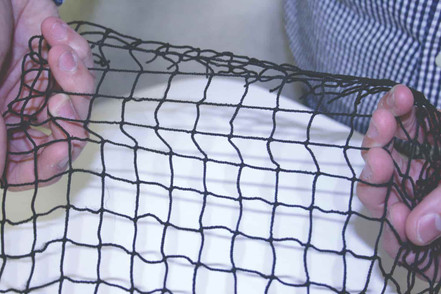
Bat netting comes in various mesh sizes to deter various bat species. A 3/8-inch mesh is typically available in 10’x10', 25’x25’, and 50’x50’ sizes. Properly installed, bat netting will block bats from getting into eaves, attics, and similar enclosed areas. The best netting is made from a tough polyethylene mesh and carries a strong guarantee--as long as 10 years. Some bat netting is virtually invisible when installed, so it blends in aesthetically with a building or structure. 
 
Like most heavy-duty bird netting, bat netting must be properly installed to be an effective deterrent. Once a perimeter cable is set up in the area to be netted off, the net is then secured to this cable. The netting should be pulled taught around all edges to keep bats from squeezing through any openings around the edges.


School Learned its Lesson: Install Bat Netting

Tuesday, February 23, 2010 by Alex Kecskes
bat nettingRecently, dozens of bats sent students ducking for cover, and maintenance workers scrambling at Barbers Hill High School in Mont Belvieu, Texas. One student complained that a bat almost hit him in the head; he narrowly avoided the flying pest by ducking out of the way as he headed for his next class. The scene inside the school was just short of panic as bats flew over students' heads while they rushed to class. To control the bat invasion, maintenance workers installed "extruder" devices, which allow the bats to fly out but not back in. They should have installed bat netting in the first place.  Oh well, lesson learned.
 
To contain the bats, officials took immediate action and shut down the school's main hallway. This forced some students to walk outside to get to class. Probably not a bad idea, since many students complained that the smell was terrible in several areas of the building.  School officials noted that as many as 52 bats were rounded up. School health officials tested many of the bats and were relieved to learn that none of the intruders were diseased. Regrettably, when students returned to class the following day, the bats were still there. Bat netting could have prevented this incident. 
 
There are over 950 kinds of bats. The big brown bat can hibernate in below freezing temperatures, so it's common to find them asleep in cold garages, houses or public buildings during early winter. These bats may suddenly appear in midwinter during a warm weather spell and may try to feed. Setting up a barrier of bat netting is one way to keep them out.
 
When installing bat netting, keep in mind that bats can fit through a hole the size of your thumb. Some bats temporarily roost behind shutters, under wood shingle siding and roofing. Others seek refuge under awnings and under flashing around chimneys. 
 
If your facility or property is troubled by bats, one sure way to exclude them is by installing bat netting. This netting is stronger than your average bird netting and it's knotted and designed especially to exclude bats. Bat netting typically comes in 3/8” mesh and is usually available in 10’x10’, 25’x25’, and 50’x50’ sizes. If you're concerned that netting will give your property a spook-house appearance, not to worry. One manufacturer makes a monofilament U.V. -protected mesh that's virtually invisible. It does a nice job in blocking bats from getting into eaves, attics, garages, and similar areas. The best bat netting is made from strong polyethylene and carries a long guarantee--up to 10 years. Bat netting is installed much like most heavy-duty bird netting. Once a perimeter cable is set up, the net is secured to this cable and pulled taught around all edges to close up any gaps.


Stop Pest Birds with Bird Proof Netting

Wednesday, February 17, 2010 by Alex Kecskes
bird proof nettingIf netting can stop an Olympic downhill skier going 80 mph, it can certainly stop a bird from damaging your property. Netting follows one simple rule of bird proofing--exclude the pests from getting at things you want to protect. Today's bird netting does that. Humanely and effectively. 
 
Airport managers like bird proof netting because it keeps birds out of aircraft hangars, maintenance bays and storage areas. Facilities managers use netting to keep birds clear of eaves, canopies, support beams and other large open spaces. Both know that bird droppings and nests can block gutters, drainpipes and vents. Pest bird droppings and debris can jam up turbine ventilators, block light sensors, obscure security cameras, and ruin solar panels. Pest bird nests can also create ideal conditions for starting electrical fires, as their dry twig and feathers make ideal kindling. Again, bird netting can keep out many of the birds that create these problems. 
 
Food processors and packagers use bird netting to keep birds out of their facilities. They know that bird droppings can create all sorts of health hazards for foods being processed and readied for shipment. In loading bays, warehouses and storage facilities, pest birds can also eat into packaged products. When these products are damaged, the expense to ship them back for repair or replacement can be huge. Bird netting is the simple barrier solution that keeps pest birds out of these sensitive areas.
 
Growers and farmers use bird netting to keep cornfields, fruit orchards and vineyards from being damaged. They use lightweight plastic mesh netting to protect fruit trees, blueberry bushes, gardens, vineyards, eaves and more from pest birds. Netting often comes in a number of different colors, so it's practically invisible. And you can order netting in various sizes and cuts to deter a wide range of pest birds. Better bird netting is U.V. protected to last longer. 
 
For really big jobs--and really large, determined birds--there's heavy-duty bird netting. This netting is ideal for protecting air hangars, garages, factories, warehouses, canopies and other large areas. The best netting meets ISO 1806 mesh test standards, is rot proof, waterproof, flame resistant and sub-zero stable. Heavy-duty bird netting should be installed by professionals who have the right lift equipment and training to do the job properly. 
 
There's also bat netting. Yes, some people have serious bat infestations that cause all sorts of headaches. Bat netting is one effective solution. It typically comes in 3/8” mesh and is usually available in 10’x10’, 25’x25’, and 50’x50’ sizes. It's ideal for keeping bats out of eaves, attics, garages, and similar areas. The best bat netting is made from a strong polyethylene mesh, and is installed like heavy-duty bird netting


Bat Netting Will Keep You From Going Batty

Thursday, February 11, 2010 by Alex Kecskes
Did you know that there are more than 1,100 species of bats? Most don't like to live in extremely cold or hot areas. Big bats prefer warm areas, smaller bats, on the other hand. are more adaptable and can be found in warm or cold climes. When bats hibernate, they gather in groups of hundreds and sleep together for warmth. Some bats eat fruit, nectar and seeds from plants. A few species of bats, called "vampire bats," even drink blood--from the backs of cattle and the feet of chickens. Whew! Time for some bat netting.
 
Bats like to hide in vacant buildings, church steeples, attics, spaces between walls, and belfries. They are also very resourceful and will sneak through very small openings or cracks, spaces as narrow as three-eighths of an inch. They'll get into building through open doors, chimneys or unscreened windows. Yes, bat netting will keep them out.
 
While the incidence of bats transmitting disease is low, when bat colonies find refuge in a  building, the droppings and odor of bat urine can be unbearable. Bat droppings are typically found in piles below walls and rafters where bats roost. Bat squeaks and the rustling noise they make as they enter or leave may also be quite irritating.
 
The only sure-fire method of preventing bats from roosting in a building is to bat-proof it with bat netting. But first, you'll need to locate and block all entrances where bats can possibly gain access. Observe the building during the last half-hour of daylight and see where bats emerge. Pay particular attention to attic louvers, chimney/house interfaces, and gable ends. 
 
Bat netting typically comes in various mesh sizes to deter various bat species. A 3/8-inch mesh is typically available in 10’x10', 25’x25’, and 50’x50’ sizes. Properly installed, bat netting will block bats from getting into eaves, attics, garages, and similar areas. The best netting is made from a strong polyethylene mesh and carries a strong guarantee--as long as 10 years. 
 
Bat netting is installed much like most heavy-duty bird netting. Once a perimeter cable is set up, the net is secured to this cable and pulled taught around all edges to close up any gaps. To protect fruit trees, vegetable gardens, blueberry bushes and grape vines, the netting should be suspended. Allow enough room between the net an the tree or crop so bats cannot reach the fruit with their beaks or claws through the netting. When draping over a fruit tree, measure the circumference of the tree and cut the net so that you are left with at least one foot extra. You should then secure the netting with twine, zip ties, or hog rings. 
 

Reduce Pest Bird Damage with Bird Netting

Friday, December 11, 2009 by Fran Prisco
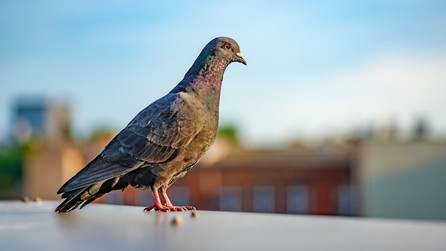
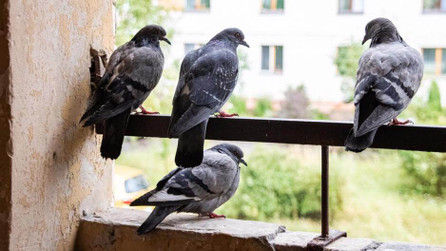
bird nettingPest birds continue to create a number of problems in cities, towns, groves and vineyards. Pigeons, for example, carry infectious diseases. Their droppings can cause tuberculosis, flu, paratyphoid, lyme disease, toxoplasmosis, and encephalitis. In rural areas, pest birds will peck on fruits, vegetables and plants, costing growers money and plenty of grief. One very effective solution is bird netting. It's both humane and environmentally friendly, since pesticides and aroma repellants can kill birds, which in some areas is illegal. Regardless of your pest bird problem, the advantages of bird netting are manifold.
 
Types and Sizes of Bird Netting
 
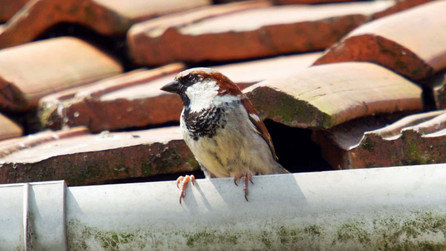
Bird netting is available for a wide range of birds. There's 2-inch mesh for deterring pigeons and crows; 1-1/8-inch mesh for starlings and blackbirds; 3/4-inch mesh for sparrows and swallows; and 4-inch mesh for deterring gulls. Bird netting also comes in a number of different weights and colors--like black, stone and translucent to blend in aesthetically with your environment. Some manufacturers offer heavier woven hexagonal mesh white netting, others offer lighter, diamond mesh nylon black netting. Both have advantages and disadvantages.
 
White bird netting, for example, offers a number of distinct advantages. For one thing, it's heavier than black netting, so it's less susceptible to wind tearing it loose. It's also stronger to resist tearing. And for some reason birds seem less likely to get under white netting than black netting. Finally, white netting is less expensive than black netting. Black netting, on the other hand is less visible, so it blends in more aesthetically with its surroundings. And since it's lighter, it requires far less in terms of supporting stakes or structures. Quality constructed netting is usually made of specially treated high-density polyethylene. This netting is highly resistant to U.V. rays.
 
Many fruit trees and berry bushes--including blackberry, black/red current, loganberry raspberry, and strawberry--need to be covered with nets to protect them from birds as the fruit ripens. Bird netting is an extremely effective means of preventing blackbird infiltration. Birds such as grackles and crows can overwhelm trees and other vegetation, leaving damage and droppings in their wake.
 
 
Heavy-Duty Bird Netting--for Really Big Jobs
 
To keep pest birds from entering air hangars, garages, factories, warehouses, canopies and other large areas, there's heavy-duty bird netting. Made of strong polyethylene, this netting is usually a U.V. resistant mesh that meets ISO 1806 mesh test standards. Some heavy-duty bird netting is rot proof, waterproof, flame resistant and sub-zero stable. Like most netting, it comes in various sizes and custom cuts.
 
Bat Netting
 
If you've got a serious bat problem, you'll need bat netting. Specially designed for bats, this netting is 3/8” mesh and usually comes in 10’x10’, 25’x25’, and 50’x50’ sizes. It's quite effective in keeping bats out of eaves, attics, garages, and similar areas. The best bat netting is made from a strong polyethylene mesh, and carries a long guarantee--some manufacturers offer a 10-year guarantee.
 
Installing and Using Bird Netting
 
There are certain guidelines that have proven helpful when installing bird netting. For vegetable gardens, blueberry bushes and grape vines, the netting should be suspended so as not to allow birds direct access to the crop. When protecting blueberry bushes and grape vines with netting, allow at least 6 inches of space. When covering a bush or vine, use support poles. To protect vegetable gardens, wrap the individual plants in netting or suspend the netting around the entire garden.
 
Before installing bird netting over trees, prune them to a height that allows you to spread the netting over the top of the tree without using a ladder.  If you have to move and go up and down a ladder, you'll waste time and energy. If your trees are just a little on the high side, use a pole to prop the net over the top of the tree. You might think about "summer pruning" your fruit trees to cut down on the number of branches you have to negotiate when draping the net. If your trees are too large to be covered by a single net, cut the net into smaller pieces and wrap the individual branches. Be sure to draw the edges of the net together under the branches to prevent birds from sneaking underneath the net. In many cases, special net zippers and clips are available to simplify maintenance. Finally, don't leave the nets on too long. Young shoots will grow through the netting, and you'll be hard pressed to remove it without ripping it to shreds.
 
Heavy-duty bird netting should be installed properly by professionals. Installed improperly, this netting will sag or droop, creating gaps where pest birds can squeeze through. Ideally, a cable should be set up around the perimeter of the netted area, and the net should then be attached to this cable. Bat netting is installed similar to heavy-duty bird netting. You set up a perimeter cable, then secure the net to this cable and pull it taught around all edges to eliminate any gaps.