Boating Enthusiasts: How to Avert Pest Birds

Friday, August 27, 2010 by Carolyn Griffin

get rid of birds from your boatImagine a serene, sunny day on the sparkling, cobalt blue-azure ocean—a day of boating, cruising, entertaining, or recreationally fishing. This idyllic vision is common for marine enthusiasts, who have a strong connection with the water.  In 2009, The Recreational Boating and Fishing Foundation reported that greater than 60% of boating participants went cruising, followed by fishing as the second most popular boating activity. Moreover, greater than 7% of all Americans over age 16—which translates to approximately 20.5 million people—own a boat while an additional 9.6 million people are considering owning a boat. 


Demographically, males (7.9%) favor owning a boat compared to females (6.6%). Boating participation numbers are significant. For example, in 2009, more than 50 million participants, or 17.9% of Americans age 16 and older went boating. The most active groups are males, individuals with household incomes from $75-$99K, seniors and individuals ages 45-64 participate more frequently than other demographic groups. The only “glitch” that can interfere with boaters’ activities is if wayward, pest birds nest or roost on the boat or in the vicinity. Unexpected pest birds can cause damage to boats and also use up the boater’s free time when an owner has to clean up unsanitary pest bird droppings.  Bird repellant products, such as those described below, are humane live bird traps.


Spikes

Ideally, spikes are used to deter pest pigeons, seagulls, and larger birds. This bird deterrent keep birds from landing, roosting, and nesting on flat surfaces. Stainless steel bird spikes are virtually invisible, will not harm the birds, and are easy to install and maintain. The product comes with a ten year guarantee, and it is available in 3”, 5”, and 8” widths. The product comes in two foot sections for easy installation, and it is available in six foot, 20 foot, and 50 foot boxes. Stainless steel bird spikes are installed with either screws or an adhesive, and the product is ideal for pest pigeons, seagulls, and larger pest birds. This flexible product can be installed on curved surfaces. Most importantly, it is humane and will not harm birds as this is an effective bird deterrent.


Plastic bird spikes are also an effective pest bird deterrent on boats.   This product is extremely durable and as strong as steel, yet only half the cost. These virtually invisible plastic bird spikes are made from unbreakable UV protected polycarbonate. They are easy to install and maintain, and they carry a five year guarantee. Available in 3”, 5”, and 7” widths, they come in 6 feet, 20 feet, and 50 feet boxes. The color variety is beneficial as it camouflages with the environment. 


Solar Bird Repeller

The Solar Bird Repeller repels birds by continually sweeping up to five feet in diameter. This product is lightweight and easy to mount, and it is ideal for boats. It can be mounted on flat or angled surfaces. Rotating at 30 rpms, it is solar powered for extended use, and it deters birds from landing and roosting. The product has two 2.5 feet telescoping rods, solar panel powers motor and the two AA rechargeable batteries for extended operation. Before installing this product, it is important to do a thorough clean up. The solar bird repeller is easy to install: just screw on the solar panel, attach the telescoping wands and set where you want to deter pest birds away. The Solar Bird Repeller is a humane bird repellant product, and it does not harm people or birds.


The next time you decide to enjoy a day of boating, keep in mind that there are several safe, humane bird control products deter pest birds. Instead of spending your time cleaning up the mess that these pest birds cause, you can use these different methods of pest bird control.


Getting Rid of Bird in Vents

Friday, August 27, 2010 by Kathy Fritsch
0 Comments »

A Few Birds Annoying You? Get Catch-and-Release Bird Traps

Friday, July 16, 2010 by Alex Kecskes
bird control productsIf the number of birds invading your property is few, but the irritant level is high, it's time you looked into some effective low-volume bird control measures. One of the most popular in this category is the Catch and Release Bird Trap aka Humane Live Bird Trap. These are ideal for removing birds from rooftops, courtyards, warehouses, sheds or similar open areas where pest birds have become a nuisance. 
 
Designed for residential or commercial use, the traps can be used indoors or out to control pest most birds. Operation is simple and straightforward: Simply place a little bird feed inside the trap to lure the bird inside; a funnel door lets the  bird walk in, but once in, there's no way out; then, an easy-access door on top lets you quickly remove or release the caged bird. 
 
If you're going to get one of these traps, make sure the cage is constructed of sturdy galvanized wire. The traps come in different sizes to accommodate a wide range of pest birds, including pigeons, starlings, swallows, sparrows and grackles. For bigger jobs, you can get multi-bird traps. These bird control traps work on the same principle, humanely trapping birds for later relocation.
 
For starlings and smaller birds, there's the heavy-duty repeating trap. It's widely used to control pest birds in "big box" stores, warehouses, outdoor gardens and nursery outlets. If sparrows are becoming a nuisance, consider the Sparrow Trap. This dual-chamber, bi-level repeating trap accommodates several sparrows and eliminates captured feeding by birds. Finally, if pigeons are invading your space and making a mess, look into the Repeating Pigeon Trap. This spacious bird control trap holds several pigeons and features two top panels, eight doors and a large access door that makes it easy to remove the pigeons. 


Goose Control on the Golf Course

Friday, June 18, 2010 by Kathy Fritsch

goose controlMany golf courses use the word “goose” in the name of the golf course.  There is Goose Creek Golf Club in Virginia, Grey Goose Golf Course in Indiana and Goose Creek Golf Course in California.  The beautifully manicured green grass and spectacular water holes attract golfers to a wonderful day on the course.  The same beautiful green grass and water holes attract geese as well, unfortunately.  How can the two live in harmony?  There is an organization that uses rescued border collies to chase away the geese from golf courses.   Even though the dogs are trained not to bark at the geese, it seems a little comical to picture a dog running around the golf courses chasing a goose.   It would be fun to hear what a pro golfer thinks about this particular form of goose deterrent.  What type of goose deterrent will not hinder but enhance a peaceful round of golf?  A sound deterrent would do the job.

Canada geese, like all birds, have a fight or flight natural instinct.  Geese can communicate with one another and send out distress calls warning other geese to take flight.  There are sonic sound deterrents that can be hidden out of sight which have satellite speakers that can be placed in various locations on the golf course.  This sonic goose deterrent plays recorded goose-distress calls every ten minutes tricking the nuisance geese into believing there is danger nearby.   The geese will simply move onto greener pastures; maybe not greener than a golf course but definitely to a different feeding ground.  This is not an average electronic device that will erode in weather if left outside.  The sonic goose deterrent system is rigidly constructed to withstand the weather and sun.   It can be programmed to turn off at night, and start back up early morning.  It is easily programmed and the grounds keepers will save time in the long run not having to clean up after the pest goose. 

Goose droppings in and of themselves can be a real problem.   The Canada Geese can consume up to four pounds of grass per day, which in turn produces approximately three pounds of fecal matter per day.  Where is an abundance of grass for their daily heavy meals?  A golf course!    Geese do carry diseases.  Histoplasmosis is a fungal disease found in goose droppings.  Humans can be affected by this disease when the spores of this fungus become airborne and are inhaled.  Giardia, a parasite that causes infection in the small intestine, is another risk to humans via geese droppings.  A golfer could become infected by simply bending down to pick up his golf ball and brush his hands on the grass that has bird droppings in the soil, and later accidently touching his mouth with the same hand.  It is also contagious and unbeknownst to the golfer, can be carried home to the family.

The risks are high, but thankfully the solution is low cost.  Installing a sonic goose deterrent on the golf course can prevent the high costs of damage the pest goose can cause.  A round of golf should be in a peaceful environment, free from harm and nuisance, unless it’s the sand trap.

Pigeon Control for Hot Dog Stealing Pests

Friday, March 19, 2010 by Alex Kecskes
stop pest pigeonsPigeons dive bomb people in the city because they feel at home in the balconies, ledges, nooks and crannies of nearby buildings. Without pigeon control to deter these wild birds, a city's many nesting and roosting areas remind them of their natural habitat on the rocky cliffs in Europe. Add to all these great nesting sites, the easy availability of food--from outdoor eateries, kids feeding them in parks, and trash cans overflowing with discarded snacks--and your have the perfect environment for pigeons. 
 
The problem with many cities and suburbs is that there are simply too many pigeons chasing too few food sources. And not enough pigeon control measures to deter them. Which is why a flock of pigeons will often gang up on a kid eating a hot dog, Cracker Jacks or pizza slice, sometimes snatching it out of the youngster's hands. And lest we not forget that pigeons also get thirsty, which is why you should never leave open drinks sitting unattended on tables, benches or other areas where pigeons nest or roost. 
 
Although they're nice to look at and fun to feed, wild pigeons are basically unclean birds, posing a considerable health risk. Pigeon control efforts can limit their flocks and thus reduce their droppings, which can carry and transmit any of 60 known diseases. Add to this the fleas, mites and ticks that bury themselves in pigeons and you're looking at one disease carrying bird. To protect yourself and your property from pest pigeons, you need some effective pigeon control
 
Today, there are many methods of pigeon control that are both effective and humane.
 
The most economical are the Bird Scare Devices. These include bright, colorful foil or flash tape and inflatable balloons imprinted with large predator eyes. Pigeons see these waving at them and become convinced that danger is near. 
 
Another humane method of pigeon control is the Bird Motel. For limited pigeon infestations, these live-trap cages allow you to catch pest pigeons and relocate them to a more natural location. The better cages are made of sturdy galvanized wire and feature funnel doors that allow a pigeon to saunter in, but not out. An easy-access door allows you to remove captured birds. These cages are ideal for rooftops, courtyards and other areas where pest pigeons tend to gather.
 
To prevent pigeons from landing and roosting, you should also look into Bird Wire Systems. These post-and-wire pigeon control set-ups create an unstable landing area pigeons hate. They are ideal for keeping pigeons off ledges, parapet walls, rooflines, handrails and similar troublesome areas. Approved for use on Federal and State government structures, bird wire systems are humane, safe and economical. Some of the best bird wire systems use nylon coated stainless steel wire, which lasts longer.
 

Pigeon Control Methods to Coo About

Friday, March 12, 2010 by Alex Kecskes
Did you know that a single pair of pigeons can produce as many as 18 new pigeons every year? Or that one pigeon can generate up to 25 pounds of droppings annually? And did you know that these droppings can carry as any of 60 transmittable diseases to people and animals? In fact, pigeons are one of the dirtiest birds around. Dirtier that bats. 
 
What you may not know is that there are all sorts of pigeon control devices out there to keep pigeons off our kids' lunch tables, park benches, boat covers, anywhere we really don't want them to be. These devices are humane and effective, and they don't involve gunpowder, propane, avicides or other lethal means. Instead, they rely on science and a bit of bird psychology to work their magic. Here are a few:
 
Post and Wire—This pigeon control device is basically a wire anchored to some springs at both ends to create an unstable landing point. It's ideal for deterring pigeons from ledges, parapet walls, rooflines, handrails and similar areas. The devices are widely used on Federal and State government buildings. The best of these use nylon coated stainless steel wire for lasting durability in harsh weather.
 
Bird Motels--They check in and can't check out--well, not without your help. These live-trap pigeon control cages are ideal for use on rooftops, courtyards and other areas where pigeons like to nest. The better ones come with an easy-access door that lets you remove the bird and release it far, far away. The good "motels" are made of galvanized wire so they won't rust or corrode.
 
Bird Scare Products--These cover the full spectrum of "danger zone" devices--flash tape that crackles in the wind, banners that snap and wave in the breeze, and balloons that resemble a giant Cyclops. Even the most courageous pigeon will eventually succumb to the fear these devices induce, and they'll take to the wind.
 
Pigeon Spikes--These look deadly but they're harmless to birds and people. Birds can't land around them. Spikes come in rigid U.V.-resistant unbreakable polycarbonate, or longer lasting slightly more expensive stainless steel. Architects, contractors and government agencies like to specify them, since they don't like the idea of their signature projects being defecated on by pigeons. To keep pigeons and larger pest birds from landing on girders or I-beams, opt for Girder Spikes. To save you rain gutters and spouts, go with Gutter Spikes.
 
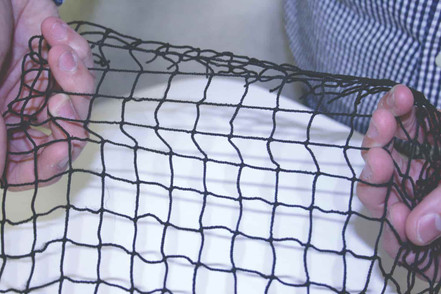
Pigeon Netting--An effective pigeon control solution, this netting will exclude them from rooftops, courtyards, patio covers, and other large areas. Some of the best netting is made from ISO 1806 mesh test polyethylene fabric.  U.V.-stabilized, flame-resistant, rot- and water-proof netting is also available. 


Early Bird Pigeon Deterrents

Wednesday, March 10, 2010 by Alex Kecskes
Pest PigeonRecently, in a city square in Russia, a lady and her son were walking across the street when her boy decided to feed a single pigeon. After dropping a small piece of his cookie on the ground, pigeons descended on the boy from everywhere. Lacking any effective pigeon deterrents, the boy's actions seemingly stirred up a hornet's nets of birds. Suddenly, hundreds of hungry pigeons appeared creating an enormous carpet of rock doves. In a matter of seconds, the  boy and  his mother had to drop all the cookies they had to escape the huge, enveloping flock of well over 100 birds.
 
Thousands of miles away, on the northwest corner of 54th Street and Fifth Avenue in New York, the city's pigeons and their droppings have become a serious problem. So serious that the owners, managers, and members of the University Club, established in 1865, proposed a monumental change. They considered the installation of full-height bird netting, an effective pigeon deterrent that they insist would protect the club's architecture from the splatter of pigeon droppings. The netting would be specially designed to keep the architecture safe and clean. 
 
Of course, bird netting is just one of many pigeon deterrents one can use. The fact is, there are a wide variety of effective deterrents available to reduce or eliminate these pest bird problems. 
 
The main idea is to keep pigeons from even considering your area as a viable place to nest and roost. One way to do that is through the use of Bird Scare Products--bright, colorful banners that rattle and wave in the breeze that make pigeons feel uncomfortable. Another pigeon control device belonging to the same family of pigeon deterrents is the Bird Scare Balloon. It not only bobs and weaves in the breeze but boasts large predator eyes to scare pigeons away.
 
Still another way to discourage pigeons when they first make their appearance, is to use a Catch-and-Release Trap, or what some more affectionately call, a bird motel. These live-trap cages are often used before pigeon infestations become a real nuisance--to catch the pest birds and relocate them to a new location. These cages are typically constructed of sturdy galvanized wire. The cages are usually equipped with funnel doors that allow a bird to walk in, but not out. 
 
Most of these cages have an easy access door that permits one to remove or release the captured pigeons. Better still, the cages are available in various sizes to accommodate any number of pest birds. (So you can capture and release even a group of "scouts.") Live trap cages are designed to entrap pigeons on rooftops, courtyards and other areas where pest birds tend to gather.


Without Goose Deterrents, They'll Just Keep Coming Back

Monday, March 8, 2010 by Alex Kecskes
Goose DeterrentsUnless they are properly controlled with goose deterrents, urban geese cause a variety of problems. The most common are summer resident goose problems, which occur when geese nest and molt on urban lawns, golf courses, and corporate headquarters. Migrant geese also invade urban areas during winter. Case in point: the 25,000 geese that invaded Rochester, Minnesota not long ago.
 
Most goose deterrents focus simply on moving geese from one location to another, but do not solve the problem. Many trap-and-transfer techniques proved ineffective in New York, for example, as they merely stabilized the goose population, instead of reducing it. Flocks of geese continue to grow in size and expand in urban areas because these areas provide an excellent habitat for geese--the prevalence of short mowed grass, water bodies, and few, if any predators. Without effective goose deterrents, uncontrolled urban goose populations can potentially result in outbreaks of diseases, which could spread to migratory geese. 
 
Canada geese live on the average about 10 years in the wild. They are a big bird with an almost 6-foot wingspan. They normally inhabit inland bodies of water, including lakes, reservoirs, large ponds, rivers and near seashores. Being grazers, they are often found on grasslands. They feed on seeds, grasses and aquatic plants. Canada geese typically return to the area where they were born and, like other geese, they are gregarious, migratory and protected. This means only non-lethal goose deterrents may be employed to control them. 
 
One popular goose deterrent is the Goose Scare Device. These include banners, balloons, and flash tape. Banners and flash tape will rattle in the breeze and create an “Optical Distraction Zone” that makes geese uncomfortable. Balloons are often covered with large predator eyes that add to the fright factor. These devices should be installed in anticipation of a geese flock invasion. They also should be combined with other goose deterrents, and they should be changed often to prevent geese from getting used to them. Finally, the devices are most effective if used at night when geese are roosting.
 
Another highly effective goose deterrent is the Chemical Goose Repellent. These are recommended for parks, shorelines, golf courses, cemeteries, lawns, yards, landscaping, shrubs, or any grass areas where geese have become a problem. The non-toxic liquid makes grass areas very unappetizing to pest geese and, after a few tastes, they'll leave.
 
The chemical most often used is made from a grape extract that's safe for pets, ducks, geese and humans. These goose deterrents can be applied with any hand-held sprayer onto a freshly mowed lawn. Two applications will last for up to three months. The chemical won’t wash off with rain or water. The best chemical goose deterrent is registered with the U. S. Environmental Protection Agency. 
 

Bird Control….Why You Need It

Friday, March 5, 2010 by Alex Kecskes
pest pigeonsYou say to yourself as you're watching a few pigeons on your roof, "Why do I need to spend money on Bird Control? They're not hurting anybody." 
 
Okay, let's see what pest birds are really doing to your property, especially over time. First off, pest birds, large or small, leave droppings. Perched on a ledge or sign, these droppings accumulate. They also cover the sidewalk and entryway in front of your business. This tells visitors that you don't care about the image your business projects; that you don't care about the health and well being of your customers. Bird control says you care. Keep in mind that pest birds, their droppings and nesting materials can carry over 60 different transmittable diseases. And lest we not forget the slip-and-fall risks bird droppings pose to customers and employees. Not a good way to start a business relationship. 
 
Once you've admitted pest birds are causing you problems, there's the cleanup expense. Businesses across the country face costly clean up expenses when they have to remove bird nests and droppings from signs, walkways, windows, outside patios, tables and chairs.  For those with a heavy pest bird infestation problem, these clean-up costs can be a weekly or monthly drain on profits. Bird control can save you from this expense.
 
Property owners who ignore or neglect their pest bird problem often face expensive equipment and property damage. Bird droppings are acidic and will eat through paint, and corrode building materials, such as stone and metal. Left unattended, bird droppings may require major restoration efforts or complete replacement of expensive equipment. Air –conditioning units, solar panels, skylights and rooftop ventilators are particularly vulnerable. 
 
Fortunately there are a number of effective and humane bird control products one can deploy to deter and repel pest birds. These include:
 
Bird Spikes--These keep larger pest birds like pigeons and gulls from landing and roosting on flat or curved surfaces. Includes Gutter Spikes for gutters and Mega Spikes for really large birds. 
 
Bird Netting—Bird control that excluding pest birds using a variety of mesh sizes. Includes super strong heavy-duty netting and ultra light no-knot netting. 
 
Electric Track--These electrically charged tracks zap birds with a harmless electrical shock when they land on them to alter their behavior and move on. 
 
Misting Systems--Ideal for open spaces, these bird control systems release a non-toxic mist, fog or scent that irritates birds' trigeminal nerve and mucous membranes through entry in their eyes, nose or mouth. Also includes hazing units for closed or semi-enclosed areas. 
 
Sound Deterrents--These sonic deterrents use predator and species-specific distress calls to scare away a variety of pest birds. They cover up to six acres.
 
Live Traps--Includes a variety of "Bird Motels" that allow you to remove pest birds to natural areas. It's bird control that emphasizes relocation. 
 

Bird Deterrents to Crow About

Wednesday, March 3, 2010 by Alex Kecskes
In a scene right out of “The Birds,” thousands of crows began roosting on Penn State's trees recently. A year earlier, about 3,000 migrating crows landed on the University Park campus creating an unsanitary mess along the Allen Street Mall and the College Avenue bus stop. College officials responded with thermal fog machines, organic digesters, and power washers to scare the crows away. But this was just a stop-gap measure. What's needed, what so many schools and colleges have come to realize, is that keeping an area free of pest birds requires professional bird deterrents.
 
The American crow is, after all, a pretty smart bird. And quite aggressive too. Some have attacked people and driven riders off their bicycles. They establish tight-knit communities to help defend their area against predators or what they may perceive as intruders. In the winter, crows roost in large flocks reaching up to 1,000 birds. They will build stick nests high in trees and sometimes in large bushes. Unless controlled by bird deterrents, crows will invade parks, campuses, orchards, farms and urban and suburban areas. They live, on average, about 6 to 10 years and will lay three to six eggs, which are incubated for 18 days. American crows will eat anything from seeds, grains, and fruits, to scavenged carcasses and small animals. To survive, crows will store excess food under leaves or ground cover, in trees, and other handy places.
 
If you've been invaded by crows, you can't use draconian methods to get rid of them. That means, no shotguns, poisons or lethal traps. Resorting to these measures could cost you a fine, since crows are protected internationally under the Migratory Bird Treaty Act of 1918. Any bird deterrents aimed at crows must be humane. 
 
One effective and humane bird deterrent you can use to keep crows from invading your property is Bird Foggers and Misters. These aerosol systems spay an irritating mist into an area to discourage pest birds like crows. The chemical used by these systems is a food-grade methyl anthranilate. It's been recognized by the FDA as a safe substance, and has been used to flavor grape soda and candies. Methyl anthranilate irritates the trigeminal nerve and mucous membranes of crows when they fly through it. The chemical enters their eyes, nose or mouth and "convinces" crows to leave. When crows flythrough this stuff, it works 30 times faster than when they're simply perched and sniffing it. 
 
Another effective bird deterrent that's been proven effective against crows is the Sonic Bird Device. These systems emit irritating sounds and predator calls (like the owl) that make crows eager to leave. They are ideal for deterring pest crows from backyards, courtyards, gardens, pool areas, patios, gazebos, parks, golf courses, rooftops or other large open spaces.
 

No-Holds-Barred Pigeon Deterrents

Thursday, February 25, 2010 by Alex Kecskes
pest pigeonsPigeons, also known as "Rock Doves," will often build nests around farms, warehouses, mills and grain storage areas. In the absence of pigeon deterrents, these birds like gathering in huge flocks around buildings, parks, bridges, and city buildings with lots of recesses, nooks and crannies. Pigeons are also filthy birds, since they fail to clean themselves, and they will live virtually anywhere and under almost any conditions. They eat mostly seeds and grains, but will eat garbage and livestock manure. It's no wonder that pigeons can cause food poisoning and spread diseases--the most common being cryptococcosis (a life threatening disease), histoplasmosis (a potentially fatal disease that affects the lungs), and salmonella. Pigeon deterrents are needed to control these outbreaks. 
 
Pigeon droppings can destroy buildings and statues. They often carry other pests like fleas, lice, mites and ticks that spread disease. One of their parasites, the northern fowl mite, is also a major pest of poultry. Other pigeon parasites--like mites, fleas, and lice--will bite people. Some of these parasites destroy fabric or stored foods.
 
The bad news is, pigeons are extremely prolific; the good news, there are all sorts of highly effective pigeon deterrents on the market.
 
If you only have an occasional pigeon to deal with, you might consider this pigeon deterrent--the Bird Motel. These live-trap cages are pretty effective in catching pest pigeons and work well on rooftops, courtyards and other areas where these birds tend to gather. After they're caught, a handy easy-access door lets you reach in and release them to a more remote location. The better motels are made of tough galvanized wire and they come in various sizes to accommodate different species of pigeons. 
 
Bird Wire Systems have also proven themselves highly effective in discouraging pigeons from landing on ledges, parapet walls, rooflines, rails and similar areas. These simple post-and-wire pigeon deterrents create a wobbly, unstable landing site that pigeons don't like. Humane and economical, bird wire systems have been approved for use on Federal and State government structures. The best systems use nylon coated stainless steel wire, which holds up better in punishing weather.
 
Next up, the Mother of all pigeon deterrents--the Bird Spike. Pigeons will avoid landing near these spikes, fearing they might be impaled. The blunted spikes are perfectly harmless to birds and people, and they come in rigid U.V.-resistant unbreakable polycarbonate spikes or slightly more expensive stainless steel spikes. You can also get bird spikes in different colors to match your building's exterior décor. 
 
Another pigeon deterrent, the Electric Track, is ideal for keeping pigeons off ledges, rooflines, parapet walls, signs, I-beams, and flat or curved surfaces. These electrified tracks deliver a harmless but annoying shock to a bird's foot. The best electric tracks feature a low-profile design.
 

To Control House Sparrows, Consider Humane Live Bird Traps

Monday, February 22, 2010 by Alex Kecskes
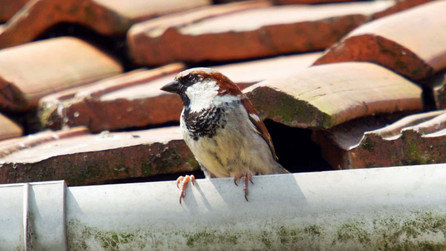
stop pest birdsAs recently as 200 years ago, there were no House Sparrows in North America. Today, there are an estimated 150 million in all 48 states. House Sparrows, sometimes called English Sparrows or "rats with wings” have interfered with or displaced a number of native birds like bluebirds, Tree- and Cliff-Swallows, and Purple Martins. Unfortunately, nuisance species like House Sparrows are prolific breeders that build nests rapidly, breeding an average of 20 chicks a year. Without effective bird control measures to limit their number, one pair of sparrows could multiply to more than 1,000 birds over a five-year period. 
 
Keep in mind that House Sparrows are fairly hardy birds and will eat up to 830 kinds of foods. Needless to say, they're not exactly finicky eaters. They also like to live near humans because people provide an easy source of food and nesting areas. Which is why you'll often find them in rafters, gutters, eaves, soffits, vents, dense vines, evergreens and shrubs. 
 
In attempts to control the numbers of these pest birds, most people reject poisons, shotguns or other lethal means. A proven effective way to keep House Sparrows under control is through the use of Humane Live Bird Traps. One manufacturer's Sparrow Trap features a dual-chamber, bi-level repeating trap that holds multiple sparrows. (For those inundated by pigeons, there's the Repeating Pigeon Trap. It holds a number of pigeons and features two top panels, eight doors and a large access door to allow birds to be easily removed.) 
 
The better bird traps are constructed of strong galvanized wire and feature funnel doors that allow a pest bird to enter with no way out. An easy-access door on top makes it simple to reach in and release captured birds. One can also get Professional Bird Traps. These are equally easy to use and humanely trap birds. They're ideal for use on rooftops, courtyards, sheds or similar open spaces where sparrows have become a nuisance.
 
The other advantage most humane live bird traps have is that they come in various bird capacities (a dozen or more birds) and multiple one-way doors. Some even have water containers and a feeding pan. 
 
Since many pest birds, including House Sparrows, often gather and nest on roofs, and since most roofs are slanted, you might want to consider getting a slanted trap. These humane live bird traps feature adjustable legs that keep the trap level. Some feature a fold-down landing platform and a heavy slide-out galvanized pan. Other models have half a dozen entry doors and a door guard. The best of these humane live bird traps come with a gallon of water and a hinged shade screen. Talk about humane. All they lack is a recliner and TV with remote!
 

Pigeon Deterrents for an Age-Old Pest

Friday, February 12, 2010 by Alex Kecskes
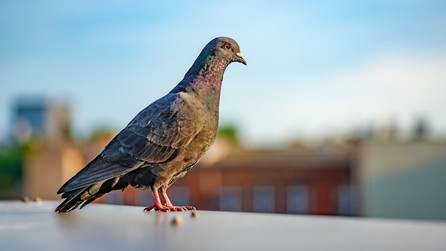
Get Pigeon DeterrentsPigeons have been on earth at least 20 million years--longer than humans. About 8,000 years ago, people began to capture and raise pigeons. The first pigeons in North America were brought over by settlers from Europe in the early 1600s. Pigeons that escaped from settlers formed the wild flocks that began to proliferate among our city buildings, bridges, and other man-made structures. In the early part of the 20th century, there were about four billion pigeons in North America. Today, pigeons can be seen everywhere. And while we love to feed them and chase them around the park, they can be a real nuisance if allowed to roost and nest in certain areas. This has given rise to an entire family of pigeon deterrents.
 
If you're just trying rid your property of a few pigeons, try the catch-and-release trap called the Bird Motel. These live-trap cages are ideal for use on rooftops, courtyards and other areas where birds tend to gather. They come in different sizes to trap small or large pigeons. An easy-access door lets you reach in to release them in the wild. Look for galvanized wire motel as they last longer outdoors.
 
If flocks of pigeons seem to gather on your property in larger numbers, there are a variety of Bird Scare products you can use. Among these are flash tape, banners, and bird scare balloons. Some of these pigeon deterrents are covered with menacing-looking predator eyes to frighten pest pigeons away.
 
Pigeons are not hire wire artists. They like to feel secure when they negotiate a landing. Enter Bird Wire Systems. These pigeon deterrents use a post-and-wire system to create an unstable landing site. Ideal for ledges, parapet walls, rooflines, handrails and similar areas, wire systems are economical and humane. They're widely used on Federal and State government buildings. One tip: Choose nylon coated stainless steel wire; it lasts longer in harsh weather environments.
 
If they can't land, they'll move on. Which is exactly what the inventor of the Bird Spike reasoned when he came up with this pigeon deterrent. Sure they look dangerous, but the blunted spikes are harmless to birds and people. The spikes come in rigid U.V.-resistant unbreakable polycarbonate, or longer-lasting slightly more expensive stainless steel. Choose the Girder Spike to keep pigeons and larger pest birds from landing on girders or I-beams; the Gutter Spike to keep pigeons from roosting in rain gutters; and the Mega Spike to deter really big birds.  
 
Another nifty pigeon deterrent is the Electric Track. Ideal for keeping pigeons off ledges, rooflines, parapet walls, signs, I-beams, and flat or curved surfaces, these electrified tracks zap pest birds with a harmless electric jolt.
 

Humane Live Bird Traps…Effective and Accommodating

Tuesday, February 9, 2010 by Alex Kecskes
In the old days, if you wanted to get rid of pest birds, you got out your trusty shotgun and peppered them with birdshot or blasted them with a propane bird cannon. Unfortunately, there were drawbacks to these "deterrents." You couldn't use them anywhere near civilization and the pesky little buggers would almost always come back. Culling pest birds by poison was and still is frowned upon by local governments and animal rights groups. 
 
Today, to safely relocate pest birds from your property, you'll need something more civilized, humane and effective. That's where Humane Live Bird Traps come in. Constructed of sturdy galvanized wire, these traps feature funnel doors that allow a bird to walk in, but not out. An easy-access door on top facilitates simple removal or release of pest birds. 
 
Next up are the Professional Bird Traps. These are just as easy to use and humanely trap pest birds for later relocation. They're ideal for use on rooftops, courtyards, warehouses, sheds or any open space where pest birds have become a nuisance. Perfect for residential and commercial use, humane live bird traps accommodate a wide range and number of pest birds.
 
For starters, there's the Sparrow Trap. This dual-chamber, bi-level repeating trap holds multiple sparrows and eliminates captured feeding by birds. Also available is the Repeating Pigeon Trap. This large capacity trap holds a number of pigeons and features two top panels, eight doors and a large access door to allow birds to be easily removed.  Next up is the Collapsible Pigeon Trap. A heavy-duty repeating trap for starlings and smaller birds, it assembles easily and is ideal for "Big Box" stores plagued by large numbers of pest birds. 
 
You can also get collapsible pigeon traps that are easily assembled and feature multiple entry doors. Some even come with a shade. Humane live bird traps like these come in various bird capacities (a dozen or more birds) and multiple one-way doors. Some come with water containers and a feeding pan. For really big jobs, you can get large pigeon traps that hold 30 or more birds, feature half a dozen one-way entry doors and up to one gallon of water with a feeder pan. 
 
Since pigeons and other pest birds often gather and nest on roofs, and since most roofs are slanted, you may want to look into slanted pigeon traps. These humane live bird traps feature adjustable legs that keep the trap level, as well as fold-down landing platforms and a heavy slide-out galvanized pan. They also come with half a dozen entry doors and a door guard. To keep trapped pigeons comfortable, these humane live bird traps include a gallon of water and a hinged shade screen. 
 

The Many Methods of Pigeon Control

Monday, December 7, 2009 by Fran Prisco

pigeon control productsPigeons have been both friend and foe to mankind for centuries. They have inspired poets and saved lives in wartime.  But when they gather in great numbers in cities and towns, they can be most unwelcome. As a pest bird, they can also be most prolific. A single pair of pigeons can produce as many as 18 new pigeons every year--it only takes 19 days for a pigeon egg to hatch baby pigeons.


Then, there are the droppings. One pigeon can generate up to 25 pounds of droppings every year, droppings that attract parasitic insects and flies. Droppings that can spread over 60 transmittable diseases to people and animals. According researchers of the Albert Einstein College of Medicine in New York, pigeon droppings can expose children to Cryptococcus Neoforman fungus. This is airborne fungus grows in rotting pigeon roots, and is present in pigeon droppings. The first step in controlling pigeon droppings is more effective pigeon control.


Aside from disease, the highly acidic nature of pigeon droppings can destroy metal, paint and roofs. In fact, droppings and nests can present property owners with an ongoing repair bills to cover damages to gutters, shingles, AC units, skylights, and dish antennas.


Thankfully, there are a number of highly effective pigeon control products currently available. Most are designed to discourage pigeons from landing and roosting. Moreover, these products have been carefully designed to avoid harming birds, animals and people.


Bird Wire Systems


These pigeon control set-ups rely on a bird's aversion to landing on wobbly or unstable surfaces. They consist of a post and wire arrangement to create an unstable landing area pigeons will avoid. Bird wire systems are ideal for deterring pigeons from ledges, parapet walls, rooflines, handrails and similar areas. The systems are humane, easy to install, and widely used on Federal and State government buildings. The best systems use nylon coated stainless steel wire for lasting durability in harsh weather.


Bird Motels


If you just have a few pesky pigeons that are causing you grief, try the Bird Motel. These live-trap pigeon control cages are ideal for use on rooftops, courtyards and other areas where pigeons like to nest. Many come with an easy-access door that lets you remove the bird and release it out in the boondocks. The best motels are constructed of galvanized wire so they won't rust or corrode in harsh weather. Bird motels come in different sizes to trap different pigeon types.


Bird Scare Products


These pigeon control devices run the gamut from flash tape that crackles in the breeze to banners that flap and snap in the wind. Also included are balloons, often covered with scary predator eyes. Few pigeons can stand the constant implied threat of these visual and auditory distractions and they eventually leave for less threatening habitats.


Bird Spikes


They look like they might impale anything that comes near them, but blunted Bird Spikes are harmless to birds and people. What makes them so effective is that birds won't land near them, since they simply can't get their wings around them. Spikes come in rigid U.V.-resistant unbreakable polycarbonate, or longer lasting slightly more expensive stainless steel. Steel spikes are available in a non-reflective metal finish and architects, contractors and government agencies will often specify them. The ever-popular spikes are now available in different styles to meet specific pigeon control needs. Girder Spikes, for example, are ideal for keeping pigeons and larger pest birds from landing on girders or I-beams. They come with adjustable “C-clamps” to fit any size girder. Gutter Spikes, on the other hand, are ideal for deterring pigeons from rain gutters. In general, spikes are easily glued or nailed down to almost any surface.


Electric Tracks


These pigeon control devices use a harmless jolt of electricity to discourage pigeons from nesting. Electric Tracks are ideal for persuading pigeons from gathering on ledges, rooflines, parapet walls, signs, I-beams, and flat or curved surfaces. The electrified tracks are easy to install on most any flat or curved surface. Best are the low profile tracks, which are virtually invisible to anyone looking up from ground level.


Bird Slopes


These are simple, surprisingly effective PVC panels that present an angled, slippery surface to pigeons that try to land on them. Bird slopes are an ideal pigeon control solution for beams, ledges, eaves, and other L-shaped areas. The panels can be ordered in a variety of colors to blend in with your building's décor. UV stabilized polycarbonate panels are best as they stand up to tough weather. 


Pigeon Netting


Bird netting can be an effective pigeon control solution. Ideal for use on rooftops, courtyards, patio covers, and other large areas, netting presents a physical barrier that keeps pest birds out. Some of the best netting is made from ISO 1806 mesh test polyethylene fabric. U.V. stabilized, flame resistant and rot and waterproof netting is also available.


Sonic Pigeon Deterrents


Sonic Repellers generate sounds that annoy or alarm pigeons. These pigeon control systems emit a variety of bird predator sounds through a speaker system. To deter pigeons, these systems effectively recreate the sounds of Peregrine falcons defending their territory. The calls are repeated regularly--usually once every ten to fifteen minutes. Sonic systems are ideal for deterring pigeons from backyards, courtyards, gardens, pool areas, patios, gazebos, parks, golf courses, rooftops or other large open spaces.


Bird Gels


As a humane pigeon control solution, Bird Gels can be quite effective. The sticky goo goes on easy with a standard caulking gun. In general, gels skin over but don't dry, leaving pest pigeons with an irritatingly tacky surface to plant their little footsies on. Of course, once they land, they can't wait to leave.


Finally, the Scarecrow


This automated pigeon control device is ingeniously effective against the most stubborn pest bird. The Scarecrow is essentially a motion-activated sprinkler that blasts unsuspecting pigeons with a squirt of water whenever it senses a bird coming near it. The device features a realistic looking bird's head. Coupled with the sudden water blast and sound, you've got an extremely persuasive pigeon deterrent. The Scarecrow was made to order for gardens, pools, spas, backyards, and other outdoor areas.