Getting Rid of Bird in Vents

Friday, August 27, 2010 by Kathy Fritsch
0 Comments »

A Few Birds Annoying You? Get Catch-and-Release Bird Traps

Friday, July 16, 2010 by Alex Kecskes
bird control productsIf the number of birds invading your property is few, but the irritant level is high, it's time you looked into some effective low-volume bird control measures. One of the most popular in this category is the Catch and Release Bird Trap aka Humane Live Bird Trap. These are ideal for removing birds from rooftops, courtyards, warehouses, sheds or similar open areas where pest birds have become a nuisance. 
 
Designed for residential or commercial use, the traps can be used indoors or out to control pest most birds. Operation is simple and straightforward: Simply place a little bird feed inside the trap to lure the bird inside; a funnel door lets the  bird walk in, but once in, there's no way out; then, an easy-access door on top lets you quickly remove or release the caged bird. 
 
If you're going to get one of these traps, make sure the cage is constructed of sturdy galvanized wire. The traps come in different sizes to accommodate a wide range of pest birds, including pigeons, starlings, swallows, sparrows and grackles. For bigger jobs, you can get multi-bird traps. These bird control traps work on the same principle, humanely trapping birds for later relocation.
 
For starlings and smaller birds, there's the heavy-duty repeating trap. It's widely used to control pest birds in "big box" stores, warehouses, outdoor gardens and nursery outlets. If sparrows are becoming a nuisance, consider the Sparrow Trap. This dual-chamber, bi-level repeating trap accommodates several sparrows and eliminates captured feeding by birds. Finally, if pigeons are invading your space and making a mess, look into the Repeating Pigeon Trap. This spacious bird control trap holds several pigeons and features two top panels, eight doors and a large access door that makes it easy to remove the pigeons. 


Mist Capture Bird Netting—Bird Control for "Big Box" Stores

Wednesday, July 14, 2010 by Alex Kecskes
mist capture bird nettingWithout effective bird control measures, "big box" retailers and warehouses often have a problem with pest birds. The little critters eat right through foods or feed packaged in plastic or paper. Most of these stores and warehouses have large open bays where birds can easily fly in. Trouble is, they rarely fly out. 
 
Fortunately, there is a simple, humane bird control product that lets you capture and release trapped birds. It's called Mist Capture Bird Netting. And it's ideal for use on birds that have found their way into these restricted areas. Birds fly into the net and they are immobilized. This makes it easy to remove birds and release them outside.
 
The strong, UV-stabilized lightweight fiber is virtually invisible to birds and comes in four different sizes-- 7’x10’, 10’x20’, 10’x30’ and 10’x40’--to handle a wide range of bird species. Use it to snare pigeons, grackles, starlings, swallows, gulls and sparrows. Best of all, this specially designed bird control netting is made to capture multiple birds in one net.
 
Easy to set up and install, Mist Capture Netting makes an ideal pest bird deterrent for use in warehouses, grocery stores, storage facilities, big box stores, air hangars, garages and similar areas where birds have become a problem. 
 
For best results when using Mist Capture Bird Netting as a bird deterrent, follow these guidelines:
 
• Hang the netting in the flight path of pest birds--either from rafter areas or supported with poles.
 
• Be sure to place netting in the direct flight path of pest birds so that they will fly into the net at their normal flying speed.  
 
• Avoid fitting the netting near landing areas, since the birds will be slowing down for a landing and may not become ensnared in the netting. 
 
• If necessary, "herd" the birds into the netting using laser lights or sound to ensure birds fly into it. 


No better time for Plastic Bird Spikes…than Spring Time

Friday, April 16, 2010 by Alex Kecskes
It's springtime. A time when most birds are thinking about mating, nest building and rearing their young. It's also a time when birds can become real pests. And nothing discourages pest birds like plastic bird spikes.
 
As most ornithologists will tell you, early spring is when male birds try to lay claim to specific territories for nesting sites. In the case of barn swallows, for example, these birds will often build mud nests attached to buildings. Other birds like sparrows, pigeons and starlings will invade all areas of your home or business property. These pests are not only a major source of damage, but they can contribute to the spread of disease and contamination when they hunt for places to roost and nest. Plastic bird spikes can protect your property from their onslaught. 
 
If you're a business owner, think of the lost business and damage to your property pest birds can cause. And heaven forbid that someone slips and falls on a bird dropping on your property. Can you say, "lawsuit?" The solution? Pest bird deterrents--like plastic bird spikes
 
Bird spikes come in all types and sizes. You can get stainless steel spikes for many applications. But if you're on a tight budget, you can also opt for affordable plastic bird spikes. Like most bird spikes, this version is surprisingly simple and effective as a pest bird deterrent. Spikes, in general, have been recommended by many building contractors, architects, and municipalities for their ability to keep birds off property. In particular, they have deterred pest birds from landing and roosting on ledges, parapets, cutouts, signs, beams, security cameras, lights, and countless other areas. Yes they look like a porcupine of rapiers, but rest assured, the blunted spikes are safe and won't harm birds, pets or people. In fact, plastic bird spikes have earned the approval of virtually every humane group worldwide, including the U.S. Humane Society and PICAS.
 
Plastic bird spikes are effective because, no matter how hard they try, pest birds can't close their wings near them, so they can't land. The rigid U.V.-resistant unbreakable polycarbonate spikes are ideal for use where steel spikes might present electrical conductivity or radio interference issues.  Which means you can use them right next to cell phone antennas, dish antennas and airport control towers. Another advantage of plastic bird spikes is they won't trap bird debris.
 
You can order plastic bird spikes in a wide range of sizes to deter all manner of pest birds. They usually come in 3-, 5- and 7-inch widths. And you can get them in a full spectrum of colors--including crystal clear, brick red, light grey, brown, black and tan. The strips come in two-foot sections and can be easily installed using glue, nails or screws. 
 

Bird Netting to Exclude and Ensnare

Friday, March 12, 2010 by Alex Kecskes
bird proof nettingThere are times when, after you've tried a number of bird deterrents, you realize the only way to rid yourself of pest birds is to simply exclude them with some kind of physical barrier. The birds have outsmarted you at every turn and you now must resort to one of the most effective bird deterrents ever invented--bird netting.
 
Fortunately, there are many types of bird netting to choose from. There's lightweight plastic mesh netting, ideal for protecting trees, gardens, vineyards, and other large areas. This netting works to exclude a number of common pest bird species. And it's available in a wide range of mesh sizes and cuts. For pigeons, seagulls and similar sized birds, there's a 1-1/8” to 2” mesh size. For sparrows, starlings, and other smaller sized birds, you can get 3/4" mesh netting. 
 
To ensure your bird netting lasts in harsh weather, opt for ISO 1806 protocol mesh test netting. You might also consider U.V.- stabilized, flame resistant and rot- and water-proof netting. Some netting is so tough, it can survive temperature extremes from 250 degree F to sub-zero. Opt for non-conductive netting in areas where radio frequency interference becomes an issue--as would be the case near cell phone towers or antennas. Most good bird netting is really strong, with some netting boasting a 40-pound burst strength.
 
And don't worry about bird netting affecting the look of your property. It now comes in a variety of colors, including white, stone and black to blend in with virtually any color scheme and building décor. 
 
Recently having made its debut is a new type of bird netting called  Mist Net Capture Netting. This product is different from regular netting in that it's designed to humanely capture and release birds trapped indoors. You can use this netting to nab those stubborn pest birds flying around in warehouses, grocery stores, storage facilities, "big box" stores, air hangars, and open bay garages.  This unique category of bird netting will corral most species of pest birds, including,  pigeons, grackles, starlings, swallows, gulls and sparrows. The netting comes in a capture kit that includes everything you need to humanely "bag" a bird in flight. The kit includes poles, attachments, a laser tool, and a 10’x30’ mist net. 
 
There are just a few simple rules when installing bird netting. If you're a grower, bird netting should be draped directly over the crop (or trees). Just make sure you tie the net to a stable overhead  structure. And be certain you completely enclose the orchard or vineyard. Remember to set the netting high enough to keep birds from getting at your crops. They're pretty clever and, if they're hungry enough, will stretch and poke until they get at your crop or fruit. 


Bird Proof Netting to Stop Pest Birds in Flight

Wednesday, March 10, 2010 by Alex Kecskes
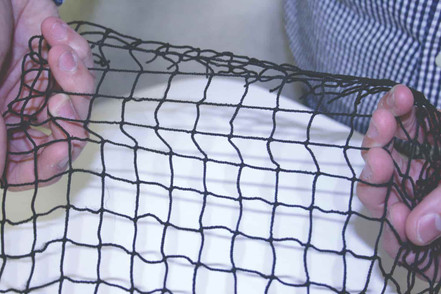
Bird Proof NettingBird proof netting has kept pest birds out of courtyards, patios, storage yards and similar areas for years. This basic exclusionary deterrent has saved property owners major cleanup and repair expenses. It has also kept seagulls from being sucked into a plane's jet engines. And saved factories and warehouses from the droppings and damage caused by pest birds. Netting has, in fact, been highly successful in preventing birds from nesting on rooftops and blocking vents, ventilators, light sensors, security cameras, and solar panels. In some cases, bird proof netting has prevented fires by keeping birds away from wires and electrical equipment. 
 
Today, bird proof netting comes in a number of different cuts and mesh sizes to deter a variety of pest birds--1/8” to 2” mesh size for pigeons or seagulls and 3/4" mesh for sparrows or starlings. Bird proof netting made of knotted polyethylene is excellent. As is  netting made of U.V.-treated twine. The bird proof netting you get should meet ISO 1806 protocols. For some applications, it's good to get flame resistant, and rot- and water-proof netting. Today's netting even comes in different colors--including white, stone and black. There's also non-conductive netting for applications where electrical conductivity or radio frequency interference preclude metallic netting. 
 
One relatively new type of netting is Mist Net Capture Netting. This netting has been specially designed to humanely capture and release birds trapped in buildings. It's ideal for use in warehouses, grocery stores, storage facilities, "big box" stores, air hangars, and garages.  This bird proof netting is highly effective for most species of pest birds including,  pigeons, grackles, starlings, swallows, gulls and sparrows. Each kit includes everything you need to safely ensnare pest birds: poles, attachments, a laser tool, and a 10’x30’ mist net. Generally, mist nets are used to capture birds that have wandered into unwanted interior areas where they can become a major nuisance.
 
Unlike most bird proof netting, mist capture netting is constructed of extremely fine fibers that birds can't see. It's more of a catch and release deterrent rather than your traditional barrier deterrent. Birds that fly into it are immediately immobilized. At this point, the trapped bird is easily removed for later release into the wild. 
 
All bird proof netting must be properly installed for best results. Bird mist capture netting is no exception. It should be placed directly into a bird's flight path so that birds will fly into the net at their normal flying speed. Try not to set up the netting near bird landing areas as the birds normally slow down for a landing and will avoid being ensnared in the netting. You may need to "herd" the birds into the mist capture netting using laser lights or loud sounds. 
 

Bird Control to Save You from Sparrows

Thursday, March 4, 2010 by Alex Kecskes
pest sparrowsRecently, fifty sparrows were seen in a desperate battle with a cat as they fought the feline for a young bird. The sparrows flew at the cat so savagely that he finally released the dead bird and fled through the doors of a nearby hotel for cover. The poor cat could obviously have benefited from some kind of bird control measure. 
 
Sparrows are small birds averaging about six inches long. They're typically found in city centers, parks, gardens, farms and fields. Social and gregarious, sparrows often gather in small flocks, feeding mainly on seeds and vegetable matter. Sparrow populations recently exploded in urban areas where they initially fed on grain for horses. These birds now scavenge for scraps at fast-food restaurants and in rural areas where corn and grains are abundant. In the absence of effective bird control, sparrows tend to nest in building nooks and crannies, the eaves of roofs, in abandoned nests of other birds and nest boxes. They will invade Bluebird houses and kill adults as well as nestlings. Placing birdhouses away from structures and removing millet and corn from feeders will discourage them. 
 
One effective bird control strategy for sparrows is Bird Netting. Ideal for courtyards, patio covers, and rooftops, bird netting will also exclude these birds from fruit trees, crops, and vineyards. Bird netting comes in various mesh sizes. For smaller birds like sparrows, a 3/4" mesh is recommended. Better bird netting is made of ISO 1806 mesh test polyethylene fabric that's been U.V. stabilized, flame resistant and rot- and water-proof. Be sure to place the netting over window recesses, balconies or even whole rooftops to prevent birds from reaching nesting areas. 
 
Another bird control device used quite often is the Electric-Track. Sparrows land on this track and can't wait to get off after getting zapped by a harmless electric shock. Once shocked, sparrows know better than to nest or feed at that particular location. Ideal for use on ledges, rooftops, and flat or curved surfaces like signs, fast-food restaurant owners like this method of bird control because the low-profile electrified track conforms to any architectural configuration. And because it’s almost invisible to those looking up from below. The best electric tracks have a flow-through design to prevent water from damming up on rooftops and other surfaces. 
 
Sparrows also don't like to feel trapped when they land. And that's what this next bird control solution does. It "grabs' their little feet with a non-toxic, sticky chemical. Sparrows and most other birds hate this stuff, even though it doesn't really trap them. You apply this goo with a standard caulking gun and the gel skins over but never sets hard. The gel stays tacky for about six months.


To Control House Sparrows, Consider Humane Live Bird Traps

Monday, February 22, 2010 by Alex Kecskes
stop pest birdsAs recently as 200 years ago, there were no House Sparrows in North America. Today, there are an estimated 150 million in all 48 states. House Sparrows, sometimes called English Sparrows or "rats with wings” have interfered with or displaced a number of native birds like bluebirds, Tree- and Cliff-Swallows, and Purple Martins. Unfortunately, nuisance species like House Sparrows are prolific breeders that build nests rapidly, breeding an average of 20 chicks a year. Without effective bird control measures to limit their number, one pair of sparrows could multiply to more than 1,000 birds over a five-year period. 
 
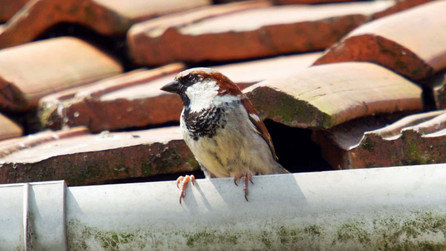
Keep in mind that House Sparrows are fairly hardy birds and will eat up to 830 kinds of foods. Needless to say, they're not exactly finicky eaters. They also like to live near humans because people provide an easy source of food and nesting areas. Which is why you'll often find them in rafters, gutters, eaves, soffits, vents, dense vines, evergreens and shrubs. 
 
In attempts to control the numbers of these pest birds, most people reject poisons, shotguns or other lethal means. A proven effective way to keep House Sparrows under control is through the use of Humane Live Bird Traps. One manufacturer's Sparrow Trap features a dual-chamber, bi-level repeating trap that holds multiple sparrows. (For those inundated by pigeons, there's the Repeating Pigeon Trap. It holds a number of pigeons and features two top panels, eight doors and a large access door to allow birds to be easily removed.) 
 
The better bird traps are constructed of strong galvanized wire and feature funnel doors that allow a pest bird to enter with no way out. An easy-access door on top makes it simple to reach in and release captured birds. One can also get Professional Bird Traps. These are equally easy to use and humanely trap birds. They're ideal for use on rooftops, courtyards, sheds or similar open spaces where sparrows have become a nuisance.
 
The other advantage most humane live bird traps have is that they come in various bird capacities (a dozen or more birds) and multiple one-way doors. Some even have water containers and a feeding pan. 
 
Since many pest birds, including House Sparrows, often gather and nest on roofs, and since most roofs are slanted, you might want to consider getting a slanted trap. These humane live bird traps feature adjustable legs that keep the trap level. Some feature a fold-down landing platform and a heavy slide-out galvanized pan. Other models have half a dozen entry doors and a door guard. The best of these humane live bird traps come with a gallon of water and a hinged shade screen. Talk about humane. All they lack is a recliner and TV with remote!
 

Humane Live Bird Traps…Effective and Accommodating

Tuesday, February 9, 2010 by Alex Kecskes
In the old days, if you wanted to get rid of pest birds, you got out your trusty shotgun and peppered them with birdshot or blasted them with a propane bird cannon. Unfortunately, there were drawbacks to these "deterrents." You couldn't use them anywhere near civilization and the pesky little buggers would almost always come back. Culling pest birds by poison was and still is frowned upon by local governments and animal rights groups. 
 
Today, to safely relocate pest birds from your property, you'll need something more civilized, humane and effective. That's where Humane Live Bird Traps come in. Constructed of sturdy galvanized wire, these traps feature funnel doors that allow a bird to walk in, but not out. An easy-access door on top facilitates simple removal or release of pest birds. 
 
Next up are the Professional Bird Traps. These are just as easy to use and humanely trap pest birds for later relocation. They're ideal for use on rooftops, courtyards, warehouses, sheds or any open space where pest birds have become a nuisance. Perfect for residential and commercial use, humane live bird traps accommodate a wide range and number of pest birds.
 
For starters, there's the Sparrow Trap. This dual-chamber, bi-level repeating trap holds multiple sparrows and eliminates captured feeding by birds. Also available is the Repeating Pigeon Trap. This large capacity trap holds a number of pigeons and features two top panels, eight doors and a large access door to allow birds to be easily removed.  Next up is the Collapsible Pigeon Trap. A heavy-duty repeating trap for starlings and smaller birds, it assembles easily and is ideal for "Big Box" stores plagued by large numbers of pest birds. 
 
You can also get collapsible pigeon traps that are easily assembled and feature multiple entry doors. Some even come with a shade. Humane live bird traps like these come in various bird capacities (a dozen or more birds) and multiple one-way doors. Some come with water containers and a feeding pan. For really big jobs, you can get large pigeon traps that hold 30 or more birds, feature half a dozen one-way entry doors and up to one gallon of water with a feeder pan. 
 
Since pigeons and other pest birds often gather and nest on roofs, and since most roofs are slanted, you may want to look into slanted pigeon traps. These humane live bird traps feature adjustable legs that keep the trap level, as well as fold-down landing platforms and a heavy slide-out galvanized pan. They also come with half a dozen entry doors and a door guard. To keep trapped pigeons comfortable, these humane live bird traps include a gallon of water and a hinged shade screen. 
 

The Bird Barrier Solution--Bird Netting

Thursday, February 4, 2010 by Alex Kecskes
Most facilities managers know that when pest birds gather in hangars, under overhangs, warehouses, and other large covered areas, a big expense is right around the corner. Bird netting can significantly cut these preventable costs.
 
For starters, bird netting can control many bird species and is frequently recommended as a bird deterrent by architects and contractors. Bird netting is both humane and effective, excluding pest birds without trapping them. The netting comes in different mesh sizes and can be cut to accommodate specific needs. For example, there's 2-inch mesh for deterring pest pigeons and crows; 1-1/8-inch mesh for starlings and blackbirds; 3/4-inch mesh for sparrows and swallows; and 4-inch mesh for deterring gulls. Bird proof netting even comes in different weights and colors--like black, stone and translucent--to blend in with a structure being protected.
 
Lightweight plastic bird netting has been used for years to protect trees, gardens, vineyards, and other large areas from pest birds. Certain species of birds love to feast on fruits and berries. European Starlings, American Robins, House Finches, and Cedar Waxwings will pluck or peck, destroying grapes and berries. Western Bluebirds have an appetite for grapes. Red-Winged Blackbirds and Goldfinches devour the seeds and/or insects in vineyards, causing costly damage. Many growers have discovered that bird netting can be an effective pest bird deterrent. 
 
Some of the best bird netting out there is made of knotted polyethylene in U.V.-treated twine. This is the kind of bird netting that lasts. If you really need tough bird netting, you can get some with a 40-pound burst strength. Some bird netting is also flame resistant with a high melting point. In areas where electrical conductivity or radio frequency interference becomes an issue, opt for non-conductive bird netting. Finally, there's heavy-duty bird netting, ideal for deterring large or aggressive pest birds that seem to gather in huge flocks in and around warehouses, airplane hangars, canopies, overhangs and other large areas. 
 

No More Pest Birds with Bird Proof Sonics

Wednesday, January 6, 2010 by Fran Prisco

Birds in a cage are nice. And birds in wild, open nature are wonderful. But pest birds gathering on your property can cause you all sorts of grief and expense.

For starters, bird droppings, nests and other bird-related debris can jam up expensive air conditioning units. They can corrode electrical parts and wiring, seize up windows, skylights, and rooftop ventilators. And let's not forget all the feathers and nesting materials, which are perfect kindling for fires in attics and near electrical wiring. What you need is bird proof sonics to keep pest birds away.

Another way pest birds can ruin your day is the acid found in bird droppings. It can ruin paint, corrode metal, crumble stonework and eat into most tar-based roofs. Then there's the problem of bird nests in rain gutters, which can cause water to back up and get under roofing tiles. This can result in some really expensive water damage to the sub-roof, attic and interior of your property. Once again, bird proof sonics can save you from this expense.

If you're a commercial property owner who deals with food, pest birds can be a real problem. It's widely known that their droppings can carry any of 60 diseases--including the West Nile virus. It's no secret that steely-eyed health inspectors pounce on any signs of bird droppings around restaurants or food processing plants. If you run an outdoor eatery, and your tables and chairs are covered with bird droppings, you can say bye-bye to your customers.

The same holds true if you operate a private school, nursery or childcare facility. Bird droppings on gyms, swings, outdoor tables and chairs can be a real turn off to parents and health inspectors. Walkways and paved areas covered with bird droppings can create potentially dangerous slip-and-fall hazards. Personal injury lawyers love this kind of expensive litigation. Bird proof sonics can help alleviate these problems.

Bus and railway stations, airports and similar areas where thousands of people gather every day don't need the problems pest birds bring to these facilities. The noise created by pest birds gathering in these terminals can drown out important public address announcements. Birds can also get sucked into the engines of jet aircraft, cause expensive delays and even a catastrophic crash. Again, bird proof sonics can prevent these problems.

Bird Proof Sonics at Work

Bird proof sonic devices use a bit of bird psychology to effectively deter a wide range of birds. They do so by emitting the distress and predator calls of birds targeted for removal. The most effective bird proof sonic devices continually vary the pitch, frequency, timing and intensity of these sounds. Also available are ultrasonic systems, which emit pulses above the range of human hearing (many birds can hear sounds between 22Khz and 30 KHz--beyond the range of human hearing).

Flexible Sound Systems

Most bird proof sonic systems broadcast bird predator sounds through a loudspeaker. One currently available system bleeps out eight high fidelity, digitally recorded bird screeches at random intervals. The sounds are emitted at120 decibels--equivalent to a jet engine. Your typical bird proof system will broadcast for several minutes, stop for about 10 minutes then repeat. Systems like these can be set up to broadcast distress and predator calls day or night. You can add speaker units to expand the coverage area up to six acres. In evaluating a bird proof sonic system, opt for those that feature U.V. protected construction to withstand long periods of sun and weather exposure.

Tuned in to Specific Species of Birds

Many systems go beyond mere volume. Some of the best bird proof sonic systems allow you to select the sound that will strike fear in a specific bird. To deter pigeons, for example, one bird proof sonic system plays the sound of Peregrine falcons defending their territory. Another system plays hawk screeches to scare starlings and seagulls. Seagulls, by the way, are unusually attuned to the sound of their own species in distress. Another system on the market can broadcast distress and predator calls for as many as 22 types of birds. The calls are repeated on a regular basis--typically once every ten to fifteen minutes. There's also a sonic system that broadcasts distress and predator calls for Canada Geese. This system is ideal for deterring pest geese from shorelines, parks, greenbelts, yards and other areas frequented by geese.

The Effective and Humane Solution

Bird proof sonic systems are among the most humane, especially when compared to using shotguns, traps or poisons. The systems are highly effective in deterring a wide range of pest birds--including pigeons, crows, starlings, swallows, gulls, woodpeckers, sparrows, grackles, cormorants and many others. You can use them wherever pest birds tend to gather, including backyards, courtyards, gardens, pool areas, patios, gazebos, parks, golf courses, rooftops or other large open areas.


Hear this: Bird Sonics Can Rid You of Pest Birds

Friday, December 18, 2009 by Fran Prisco


Birds don't hear the same way we do. The fact is, they're acutely sensitive to the sounds around them. They can, for example, recognize and remember sounds in absolute pitch (the ability to reproduce a tone without reference to an external standard). Birds can also recognize 'timbre' (a fundamental note combined with harmonies). And birds hear shorter notes than we can. We process sounds in bytes about 1/20th of a second; birds only need 1/200th of a second. So in the time it takes us to hear one sound, birds could conceivably hear up to ten separate notes. Moreover, some birds, like pigeons, can hear much lower sounds than we can. One thing birds have in common with us is their range of hearing, which is most sensitive between 2000 Hz and 4000 Hz. Bird control experts have used all this knowledge to develop a number of highly effective sonic bird deterrents.


Exploiting the Talent of Our Fine Feathered Friends


Leveraging this knowledge of how birds hear, bird control manufacturers have come up with a number of very effective sonic bird repellers. These devices have been carefully designed to tap into a bird's natural fear of predators. The result has been both sonic and ultrasonic devices that emit a variety of distress and predator calls, in addition to various irritating sounds. These sounds are broadcast via special generating units to cover a lot of ground--up to 40 acres.


Humane is the Name of the Game


Today's sonic bird deterrent systems are highly effective without harming birds, pets or humans. They are much preferred to breeding falcons to kill pest birds, or using shotguns, traps or poisons to thin out a flock. They are ideal for deterring pigeons, crows, starlings, swallows, gulls, woodpeckers, sparrows, grackles, cormorants and many others. Sonic and ultrasonic bird deterrents have been widely used in backyards, courtyards, gardens, pool areas, patios, gazebos, parks, golf courses, rooftops or other large open spaces.


Birds are Not Dummies


Most birds are pretty smart. After a few false sonic threats, they figure things out and determine that the sound won't harm them. So they stay, poop and nest. For this reason, the best sonic repellers will continually alter the pitch, frequency, timing and intensity of their sounds. This keeps the "threat" fresh and alive to deter birds that quickly get used to repetitive sounds. Some birds, it seems, respond only to really loud sounds. This is why some systems on the market are capable of emitting "enemy" bird screeches at ear-piercing120 decibels--similar to a jet engine.


The Enemy is Near


Bird sonic systems are most effective when they tap into a bird's natural fear of predators. To strike fear into the hearts of pigeons, one commercially available system blasts the sound of Peregrine falcons defending their territory. Another sonic system aimed at starlings and seagulls, emits the sounds of predator hawk screeching and gulls under attack. One popular system emits distress and predator calls for as many as 22 types of birds. The calls are repeated regularly--about once every fifteen minutes.


Still another sonic system aimed at deterring Canadian Geese broadcasts predator and distress calls that cover up to three acres. Ideal for deterring geese from shorelines, parks, greenbelts, yards and other areas frequented by geese, this system broadcasts for two minutes, stops for 10 minutes then repeats. In general, sonic sound systems emit natural sounds that are not unpleasant to humans. They can be set up to emit distress and predator calls day or night. And speaker units can easily be added to expand the coverage area up to six acres.


Why Bird Sonics


Sonic pest bird deterrents can prevent you from hearing the sound of money leaving your pocket. Pest birds cause millions of dollars in property damage annually. Their nests, droppings and the diseases have been shown to have a major impact on homeowners, boat owners, facilities managers and municipalities worldwide. Birds can carry up to 60 known disease--some very serious.  Bird droppings can also destroy wood, plastic stone and even steel. Many people have slipped on bird droppings and major restaurants have been cited for the "presence on the premises" of bird droppings. All of this underscore the need for effective pest bird control, and sonic systems are one way to deter these birds.


Bird Proof Netting

Wednesday, November 4, 2009 by Fran Prisco

bird proof nettingLet's face it, pest birds can cost you a lot of money. Especially when they gather, nest and poop in airplane hangars, canopies, garages, factories, warehouses, eaves and other covered areas. There are many ways to humanely get rid of pest birds. One of the most effective is bird netting. But before getting into why bird netting works so well, we should look at why doing nothing is not a good idea.


When pest birds make their home in warehouses, their droppings can ruin expensive products awaiting shipment in loading bays. We all know that pest birds like to invade covered areas in large numbers. And that means lots of bird droppings. Droppings that can freeze up forklifts, chain-driven power lifts, loading dock doors, windows, and access panels. Droppings that can cover and damage electrical panels and outlets. Another problem is that bird droppings can create slip-and-fall hazards for workers and visitors. This can become a huge legal liability to both public and private concerns. One begins to see why bird netting could be indispensable.


Birds in aircraft hangars can create all sorts of problems. Clinton Air Force Base in Oklahoma had six hangars with 200-300 house sparrows in each hangar. Lockbourne Air Base in Ohio had 2,000 to 3,000 house sparrows between three hangars with an additional 2,000-3,000 starlings. Bird droppings, accumulating on the aluminum skin of airplanes, can corrode the metal and eventually weaken the structure itself. Another serious concern is that if droppings, feathers, and other matter get into the engines, critically important parts must be cleaned as they could stop an engine during flight. Cleaning an aircraft engine is very expensive and time consuming.


Pest bird droppings can also pose significant health risks, carrying and transmitting any of 60 known diseases. Sparrows and Feral Pigeons can carry bacteria causing Salmonellosis. Feral Pigeons carry Ornithosis, which is similar to viral pneumonia. Birds, bird droppings and their nesting materials contain insects and mites. These insects can damage property, foods and fabrics stored in warehouses. More reasons why bird netting is so important.


Bird netting has been shown to be an effective and humane bird control solution for a growing  variety of commercial  applications. It comes in a number of colors, including white, stone and black.  Black bird netting provides natural U.V. protection and won't discolor when it gets dirty and dusty. Installed properly, this type of bird netting is almost invisible.


You can get bird proof netting in several mesh sizes to control pest birds without trapping them. For large birds like pigeons and seagulls, a 1-1/8” to 2” mesh size is recommended. For smaller birds like sparrows and starlings, smaller sizes are available. Some netting is U.V. stabilized, flame resistant and rot and waterproof to last longer. Heavy-duty bird netting is made of high strength polyethylene. Then there's knotted polyethylene bird netting, which is available in U.V. treated twine for extended life and comes in burst strengths of up to 40 pounds. Many of these nets are flame resistant and have a high melting point. Ideal for hot enclosed areas.


If you want to cover an airplane hangar, warehouse or other large area with sufficient bird netting, you'll need thousands of square feet of bird netting and special lifts and power equipment to hoist it into place. To ensure a proper installation, a cable should be set up around the perimeter of the area being netted, and the netting should then be attached to this cable. A big job like this usually requires a professional bird control installer. Keep in mind that if bird netting is not properly installed, it will sag and droop, creating gaps that allow pest birds to enter.


If you're a facilities manager in charge of a hangar, warehouse or other large building,  and you can't afford the problems of pest birds invading your space, it's easy to see why bird netting is such a viable solution.